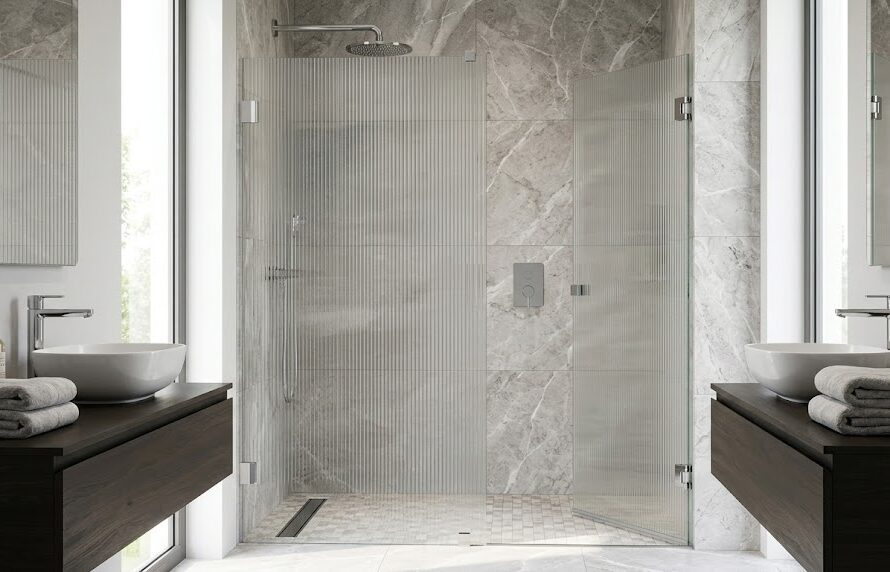
Upgrading your bathroom starts with the details — and nothing shapes the look and function of your shower more than the hardware holding it all together. Whether you’re installing a brand-new enclosure or replacing worn fittings, this shower door hardware guide walks you through everything you need to know: from shower door handle types and shower door hinges to shower door tracks and the finer points of frameless door hardware.
At Berwyn Glass, we’ve helped homeowners and contractors across the region choose the right shower door fittings for every style and budget. Here’s the complete breakdown.
Why Shower Door Hardware Matters More Than You Think
Most people focus on the glass — frosted, clear, patterned — and treat the hardware as an afterthought. That’s a mistake. Your glass door hardware bears the full weight of the door, takes daily contact from wet hands, and defines the visual style of the entire shower enclosure.
Poor-quality fittings corrode, loosen, and leak. Quality shower door accessories last decades, maintain a watertight seal, and keep their finish looking sharp. Understanding the components before you buy saves money, prevents installation headaches, and ensures your shower functions perfectly for years.
Part 1: Shower Door Handle Types
The handle is the most touched part of your shower — literally. It needs to feel solid, look right for your bathroom aesthetic, and resist the humid, soapy environment it lives in. Here’s a breakdown of the main shower door handle types available today.
Towel Bar Handles
The towel bar is the most common handle style for frameless and semi-frameless enclosures. It runs horizontally or vertically across the door face, offering a wide grip area. These handles range from slim, minimalist bars (popular in modern bathrooms) to heavier, more traditional profiles with decorative end caps.
Best for: Frameless shower doors, contemporary and transitional bathroom styles.
Material options: Brushed nickel, polished chrome, matte black, oil-rubbed bronze.
D-Ring and C-Ring Handles
D-ring handles provide a compact, curved grip that projects out from the glass at a 90-degree angle. They’re a popular choice where a full-length towel bar would feel visually heavy, especially on narrower door panels.
Best for: Smaller enclosures, sliding doors, or anywhere a subtle hardware profile is preferred.
Knob Handles
Less common but still used in traditional and cottage-style bathrooms, knob handles attach centrally to the door and provide a single-point grip. They work best on lighter doors and framed enclosures.
Best for: Traditional framed shower doors, vintage bathroom aesthetics.
Recessed Pull Handles
These are integrated into the edge of the glass using a routed recess — no external hardware at all. The result is an ultra-clean look where the hardware is invisible.
Best for: High-end minimalist bathrooms where visual cleanliness is the priority.
Handle Finish Guide
Choosing the right finish matters as much as the style. Common options include:
- Polished Chrome — Bright, reflective, easy to clean, classic appeal
- Brushed Nickel — Softer sheen, hides water spots, works with warm and cool tones
- Matte Black — Bold contrast, trending in contemporary bathrooms, pairs well with dark tile
- Oil-Rubbed Bronze — Warm, aged look for traditional and rustic styles
- Brushed Gold / Satin Brass — Luxurious finish gaining popularity in upscale renovations
At Berwyn Glass, we stock handles in all major finishes, so you can match existing fixtures without compromise.
Part 2: Shower Door Hinges — The Heart of the Enclosure
If handles are the most touched component, shower door hinges are the most critical. They carry the weight of the door through thousands of open-and-close cycles, and their quality directly determines how long your enclosure performs reliably.
Types of Shower Door Hinges
Pivot Hinges
Pivot hinges are the standard choice for most frameless shower enclosures. Unlike traditional hinges that mount along the door’s edge, pivot hinges attach at the top and bottom of the door (or at one point on each), allowing the door to swing on a central or offset axis.
Advantages: Clean lines, strong load capacity, adjustable alignment. Common use: Heavy frameless glass panels (usually 3/8″ or 1/2″ thick).
Wall-Mounted Glass Hinges
These hinges mount directly to the wall on one side and clamp to the glass on the other. They’re the go-to choice for frameless enclosures where the door swings out from a fixed glass panel or tile wall.
Advantages: Maximum design flexibility, visible hardware that can be decorative. Material: Usually solid brass or stainless steel with a plated finish.
Glass-to-Glass Hinges
When two glass panels meet — for example, a door hinged to a fixed side panel rather than a wall — glass-to-glass hinges are used. These clamp both panels without requiring a wall or frame.
Advantages: Fully frameless look, works in corner configurations. Note: Requires precise installation to ensure both panels are plumb and level.
European Concealed Hinges
Used primarily in framed enclosures, concealed hinges are hidden when the door is closed. They offer a cleaner look than traditional exposed butt hinges.
Advantages: Neat appearance, adjustable in three axes for fine-tuning alignment.
Hinge Weight Ratings
This is an often-overlooked specification. Every hinge has a maximum load rating. A 1/2″ tempered glass panel can weigh 15–20 lbs per square foot. Always confirm that your selected hinges are rated well above the actual door weight — Berwyn Glass engineers can help you calculate load requirements for any project.
Hinge Finishes and Corrosion Resistance
In a shower environment, corrosion resistance is non-negotiable. Look for:
- 316 marine-grade stainless steel for the best rust resistance
- Solid brass with quality plating for decorative hardware
- Avoid zinc die-cast components in wet environments — they corrode quickly under humid conditions
Part 3: Shower Door Track — The Backbone of Sliding Enclosures
While frameless swing doors use hinges and minimal hardware, sliding enclosures depend entirely on the shower door track system. The track guides the door’s movement, carries its weight, and keeps water inside the shower.
Bottom Track vs. Top-Hung Track Systems
Bottom Track (Floor-Mounted)
The most traditional approach: a metal channel is secured to the shower floor or sill, and the door slides along it on rollers or guides.
Advantages: Proven reliability, widely available, lower cost. Disadvantages: The bottom channel can accumulate soap scum and mold if not cleaned regularly. Some homeowners find it a trip hazard.
Top-Hung (Frameless Track) Systems
A modern alternative where the door hangs from a track mounted above the enclosure. A small floor guide (not a full channel) keeps the bottom of the door steady.
Advantages: No floor channel to collect grime, cleaner aesthetic, easier to clean the shower floor. Disadvantages: Higher installation cost, requires a solid structural mount above the shower.
Track Materials
Track systems are typically made from:
- Aluminum — Lightweight, corrosion-resistant, standard in most residential enclosures
- Stainless steel — Heavier, more premium feel, better for large or heavy doors
- Brass — Less common but available in traditional enclosure styles
Finish options mirror handle and hinge choices: chrome, brushed nickel, matte black, and bronze are the most common.
Bypass vs. Single-Slide Tracks
Bypass tracks accommodate two door panels that slide past each other — useful where a wide opening is needed but a swing door isn’t practical (e.g., a bathtub enclosure).
Single-slide tracks have one moving panel and one fixed panel. This is a common choice for smaller shower stalls where the opening only needs to be half the total enclosure width.
Part 4: Frameless Door Hardware — What Sets It Apart
Frameless door hardware is specifically designed for use with thick tempered glass (typically 3/8″ or 1/2″) without any metal frame surrounding the glass panels. This creates the sleek, open look that defines modern shower design — but it puts much higher demands on the hardware.
Key Components in a Frameless System
Glass clamps and U-channels — These secure fixed panels to the wall and to each other. They must grip the glass precisely without cracking it.
Heavy-duty pivot sets — Frameless pivots are engineered for heavier loads than framed equivalents. Look for units rated to at least 150 lbs.
Wall anchors and seals — Unlike framed systems where the frame creates the seal, frameless enclosures rely on precisely placed polycarbonate or silicone seals on the glass edges.
Magnetic door seals — A frameless shower door typically uses a magnetic strip along one vertical edge to create a watertight closure without a frame.
Common Frameless Hardware Mistakes to Avoid
- Using undersized hinges for the glass weight
- Skipping the bottom door seal — even small gaps let water escape
- Mixing finishes from different manufacturers (tolerances and shades often don’t match)
- Over-tightening glass clamps, which can stress and eventually crack the glass
Berwyn Glass provides complete hardware sets for frameless enclosures, pre-matched in finish and engineered to work together — eliminating the guesswork of mixing components from different sources.
Part 5: Shower Door Fittings and Accessories
Beyond the main hardware, a range of shower door fittings and shower door accessories complete and protect your enclosure.
Wall Profiles and Jambs
These aluminum or stainless profiles attach to the wall where a fixed glass panel meets a tiled surface. They create a clean transition, protect the glass edge, and contribute to the watertight seal.
Sweep Seals and Wiper Seals
Mounted along the bottom of the door and along vertical edges, sweep seals are the unsung heroes of any shower enclosure. They prevent water from escaping under or around the door without impeding smooth operation. Replace them if they become brittle, torn, or no longer make full contact with the glass or sill.
Towel Bars and Grab Bars
Some hardware packages include an external towel bar that mounts on the outside face of the door — doing double duty as a handle and a place to hang a towel. These must be rated for the load if they’ll be used as grab bars.
Door Clips and Glass Supports
Mid-panel clips and glass-to-glass supports stabilize large or unusually shaped enclosures. They’re particularly important in walk-in configurations where a long panel needs support at its free edge.
How to Choose the Right Hardware Package
With so many options in this shower door hardware guide, how do you decide? Here’s a simple framework:
Step 1 — Choose your enclosure type first. Frameless, semi-frameless, or framed. This determines the core hardware system you need.
Step 2 — Confirm glass thickness. 1/4″ glass suits framed enclosures. 3/8″ or 1/2″ is standard for frameless. Your hardware must match.
Step 3 — Pick your finish. Choose a finish that coordinates with your faucets, towel bars, and other bathroom fixtures. Consistency makes the room look intentional.
Step 4 — Verify load ratings. Measure your door panel dimensions and calculate approximate weight. Confirm that hinges, pivots, and tracks are rated appropriately.
Step 5 — Choose quality over price on critical components. Hinges and track rollers bear the most wear. This is not where to cut corners.
Why Choose Berwyn Glass for Your Shower Door Hardware
At Berwyn Glass, we don’t just sell glass — we supply complete hardware solutions for every type of enclosure. Our team includes experienced glaziers and installation specialists who can help you navigate every decision in this shower door hardware guide, from selecting the right frameless door hardware to matching finishes across an entire bathroom renovation.
We carry professional-grade shower door fittings and shower door accessories from trusted manufacturers, and we offer full installation services for residential and commercial projects. Whether you’re renovating a master bath, fitting out a new build, or replacing aging hardware on an existing enclosure, Berwyn Glass has the expertise and inventory to get the job done right.
Final Thoughts
Understanding the hardware behind your shower door makes you a smarter buyer and ensures better results — whether you’re doing the work yourself or specifying products for a contractor. From the weight-bearing capacity of your shower door hinges to the track system carrying your sliding panels, every component plays a role in creating an enclosure that performs beautifully for years.
Use this guide as your reference, and when you’re ready to move forward, the team at Berwyn Glass is here to help you choose, source, and install the right hardware for your project.