If you’ve ever shopped for custom glass — whether for a shower enclosure, tabletop, window replacement, or commercial project — you’ve probably noticed that prices can vary dramatically from one quote to the next. That’s not an accident. Custom glass is exactly what the name implies: made to order, shaped to spec, and priced according to a surprisingly long list of variables.
At Berwyn Glass, we believe informed customers make better decisions. So instead of leaving you guessing, this guide breaks down every major factor that affects custom glass cost — from the obvious (size) to the ones most people never think about (edge finishing and lead times).
What Affects Custom Glass Cost? The Short Answer
What affects custom glass cost comes down to six core categories: the type of glass, its thickness, size and shape, any special treatments or coatings, the finishing details, and installation complexity. Each of these can push your price up or down — sometimes significantly. Understanding them helps you make smarter choices and avoid paying for more than you actually need.
Let’s go through each one.
1. Glass Type: The Biggest Cost Driver
The first and most influential of all glass pricing factors is the type of glass itself. Not all glass is made equal, and the differences in manufacturing complexity translate directly into price differences.
Annealed Glass is the most basic form — standard float glass that hasn’t undergone any additional heat treatment. It’s the most affordable option and works well for many interior applications like picture frames, display cases, and shelving where safety isn’t a primary concern.
Tempered Glass is heat-treated to be significantly stronger than annealed glass, and when it does break, it shatters into small, relatively harmless granules rather than sharp shards. The tempered glass price is typically 20–50% higher than standard glass of the same dimensions, but for shower doors, glass railings, tabletops, and exterior applications, it’s often required by building codes — and worth every cent.
Laminated Glass consists of two or more glass layers bonded with a plastic interlayer (usually PVB). It holds together when broken, making it ideal for overhead glazing, storefronts, and hurricane-resistant applications. Because of the additional materials and bonding process, laminated glass carries a notable price premium.
Frosted and Decorative Glass adds privacy and aesthetic value. Frosting can be achieved through acid etching or sandblasting, both of which add labor and material costs. Patterned, textured, and art glass are priced even higher due to their specialty manufacturing.
Low-E and Insulated Glass Units (IGUs) are engineered for energy efficiency. An IGU consists of two or more glass panes sealed around an air or gas-filled cavity. These are common in windows and doors and carry significantly higher glass type cost differences due to their multi-component assembly.
2. Glass Thickness: More Than Just a Number
Glass thickness cost is one of the most straightforward variables, but it surprises many customers. Thicker glass requires more raw material, weighs more (increasing shipping and handling costs), and is more demanding to cut and finish.
Here’s a general thickness guide:
- 3mm – 4mm: Lightweight, used for picture frames, cabinet inserts, small decorative panels
- 6mm: The most common general-purpose thickness for tabletops, shelving, and interior partitions
- 8mm – 10mm: Heavier-duty applications like shower enclosures, glass doors, and commercial shelving
- 12mm+: Structural applications, frameless glass walls, heavy-duty commercial work
Moving from 6mm to 12mm doesn’t just double your cost — it can triple it when you account for the additional material, cutting difficulty, and edge-finishing time. At Berwyn Glass, we help customers choose the minimum appropriate thickness for their application so they’re not overpaying for structural overkill.
3. Size and Shape: Why Bigger Isn’t Always Just “More Expensive”
Glass size pricing scales with area, but not always linearly. Larger pieces require more careful handling, larger cutting tables, more waste from off-cuts, and greater risk during transport. A single large panel often costs more per square foot than multiple smaller pieces of the same total area.
Shape complexity is where pricing can really jump. Rectangular cuts are the cheapest — they’re fast, waste-efficient, and require minimal tooling. As soon as you introduce:
- Curved or arched cuts
- Notches and cutouts (for hardware, outlets, or irregular fitting)
- Angled cuts or mitered edges
- Irregular polygons
…the labor time increases substantially. A curved shower enclosure panel can cost two to three times more than a rectangular panel of the same surface area, purely because of the additional cutting, grinding, and fitting time involved.
These are key custom glass variables that any reputable glazier will factor into your quote — and that you should ask about before assuming one quote is directly comparable to another.
4. Edge Finishing: The Hidden Cost Most People Overlook
Raw-cut glass has sharp, unfinished edges. Depending on your application, those edges may need to be finished for safety, aesthetics, or both. Edge work is billed separately from the glass itself, and it adds up fast on larger or more complex pieces.
Common edge finishes and their relative costs:
- Seamed Edge: Minimal grinding to remove sharpness. Cheapest option, typically used where the edge will be hidden.
- Flat Polish: A smooth, matte-finished edge. Good for functional applications like shelving.
- Pencil Polish: A slightly rounded, polished edge. Standard for most exposed glass edges.
- Beveled Edge: A angled, polished edge that creates a decorative prismatic effect. Popular for mirrors and tabletops. Significantly more expensive.
- Ogee and Decorative Profiles: Custom routed profiles for high-end furniture and architectural glass. The most labor-intensive and costly.
For a standard glass tabletop, edge finishing can represent 15–30% of the total job cost. For decorative pieces with perimeter bevels, it can be even more.
5. Special Treatments and Coatings
Beyond the glass type itself, a range of treatments and coatings can be applied — each adding cost but also adding value.
Tempering, as mentioned above, is the most common treatment. Once glass is tempered, it cannot be cut or drilled, so all modifications must happen beforehand.
Tinting and UV Coatings reduce solar heat gain and ultraviolet transmission. Common in commercial storefronts and residential windows, these coatings add material cost but can reduce long-term energy bills.
Anti-reflective (AR) Coatings are used in display cases, museum glass, and architectural applications where reflection needs to be minimized. They are among the most expensive coatings available due to their precision manufacturing process.
Ceramic Frit and Digital Printing allow patterns, logos, and gradients to be baked directly onto the glass surface. Used widely in commercial architecture and privacy screens, printed glass commands a significant premium.
Mirror Coatings turn standard glass into a mirror through the application of a silver or aluminum backing. Standard mirrors are relatively affordable; specialty mirrors (antique, bronze, one-way) cost more.
Each of these represents a distinct glass type cost difference that should be discussed with your glass supplier before finalizing a project scope.
6. Holes, Notches, and Hardware Cutouts
Drilling glass is a precision operation that requires diamond-tipped tooling and careful technique to avoid cracking. Every hole — whether for a bolt, hinge, or hardware fitting — adds cost to your order.
Common drill work includes:
- Round holes for standoffs, bolts, and shower door hardware
- Notches for hinges and handles
- Cutouts for outlets, light fixtures, or built-in hardware
For tempered glass specifically, all drilling and notching must be completed before the tempering process. If holes are needed, they must be planned and executed at the fabrication stage — which is why submitting accurate, detailed drawings to your glass supplier matters so much.
At Berwyn Glass, we review hardware specs with customers before fabrication to make sure every cutout is positioned correctly the first time.
7. Glass Installation Factors
Glass installation factors are often underestimated in budget planning. Even if your glass itself is priced fairly, the installation can vary widely based on:
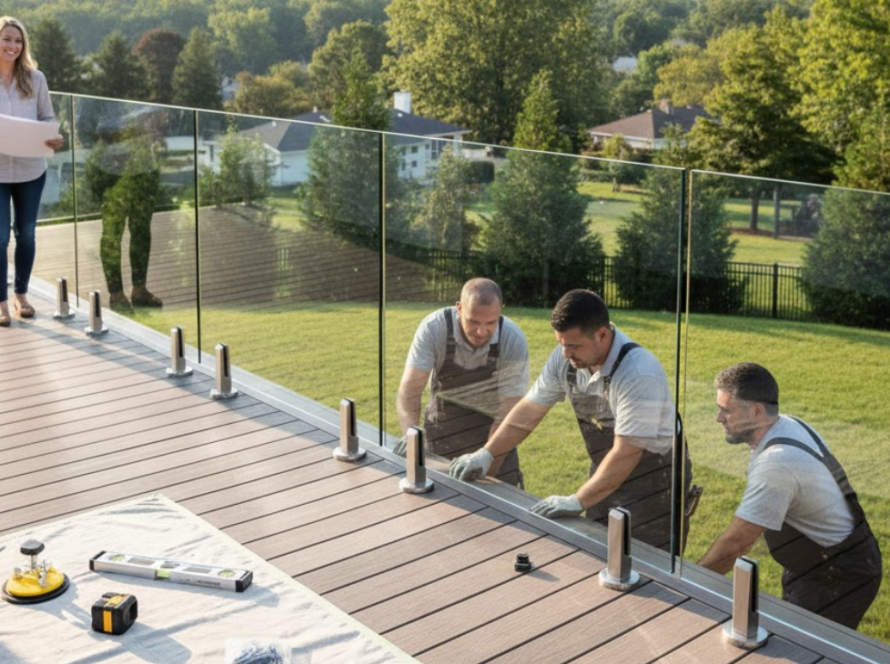
Access and height: Ground-floor installation is straightforward. Upper-floor, staircase, or overhead installation requires additional labor, safety equipment, and sometimes specialized rigging.
Structural preparation: Installing a glass partition, railing, or curtain wall may require anchor points, substrate preparation, or coordination with other trades. This adds both time and cost.
Hardware and framing: Frameless glass systems (like frameless shower enclosures or glass railings) require precision-machined hardware — channel tracks, standoffs, patch fittings — that can cost as much as the glass itself.
Site conditions: Difficult access, tight spaces, or non-standard wall conditions (out-of-plumb walls, irregular floors) all increase labor time.
Removal and disposal of existing glass: If old glass needs to come out before the new installation goes in, that’s an additional cost to factor in.
Always ask for an itemized quote that separates material costs from installation costs. It helps you compare quotes accurately and understand exactly what you’re paying for.
8. Lead Time and Rush Orders
Standard custom glass orders typically have lead times ranging from a few days to two or three weeks, depending on the complexity, the supplier’s workload, and whether specialty materials need to be sourced.
If you need glass faster, rush fabrication is usually possible — but at a premium. Expedited orders may carry a surcharge of 15–30% or more, depending on how quickly the turnaround is needed and what resources need to be reallocated to prioritize your job.
Planning ahead is the single easiest way to avoid paying rush fees.
9. Quantity and Project Scope
Like most manufactured products, glass benefits from economies of scale. A single small piece may carry a minimum order charge that makes it seem expensive per square foot. A large commercial project with dozens of identical panels will typically carry a lower per-unit cost.
For residential customers, combining multiple glass needs into one order — for example, ordering tabletop glass, mirror glass, and shelf glass at the same time — can sometimes reduce per-piece costs and save on delivery charges.
Putting It All Together: What a Realistic Cost Breakdown Looks Like
To illustrate how these factors interact, consider two common projects:
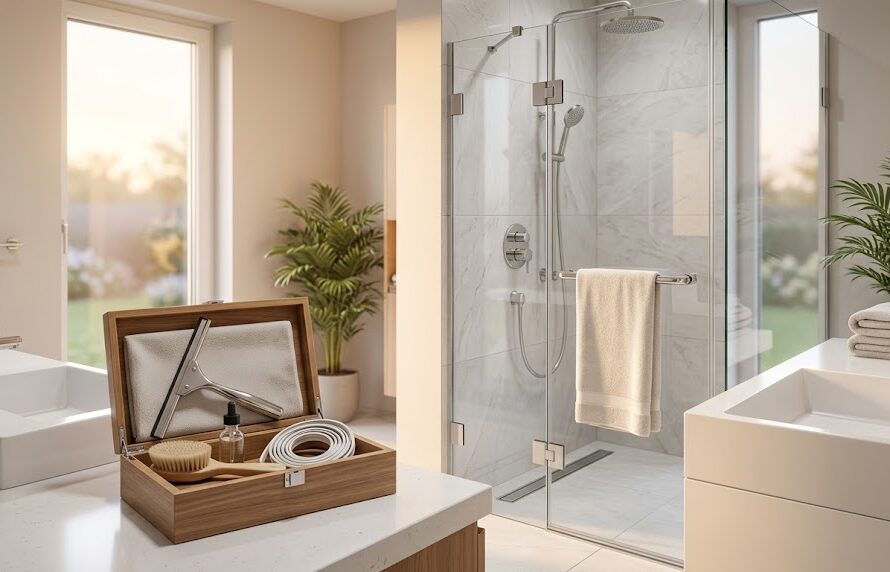
Residential Shower Enclosure (frameless, tempered):
- 10mm tempered glass panels: core glass cost
- Edge polishing on all exposed edges: +15–20%
- Drilled holes for hinges and hardware: +per-hole charge
- Hardware (hinges, handle, channel): often equals or exceeds glass cost
- Installation labor: varies by access and complexity
Commercial Glass Partition:
- 12mm tempered or laminated glass: premium glass cost
- Full-height panels requiring large-format cutting: size premium
- Printed or frosted privacy band: coating surcharge
- Structural framing and anchoring hardware: significant addition
- Professional installation with site prep: substantial labor component
In both cases, the final price is the sum of many variables — not just “glass per square foot.”
Why Getting an Accurate Quote Matters
Because so many variables affect the final price, rough online estimates are rarely reliable for custom glass. The only way to get an accurate number is to work with an experienced local glazier who can assess your specific requirements.
Berwyn Glass has been helping residential and commercial customers navigate these decisions for years. We provide transparent, itemized quotes so you know exactly what you’re paying for — and why. Whether you need a single glass shelf or a full commercial glazing package, our team will walk you through the options, help you make cost-effective choices, and deliver quality work on schedule.
Final Thoughts
Understanding what affects custom glass cost puts you in a much stronger position when shopping for glass work. The key takeaway: price is a function of type, thickness, size, shape, edge work, coatings, hardware, and installation — and every project is different.
The glass pricing factors we’ve covered here aren’t meant to overwhelm you. They’re meant to help you ask better questions, compare quotes more accurately, and make decisions that balance quality with budget.
When you’re ready to start your project, Berwyn Glass is here to help. Contact us for a free, no-obligation quote — and let’s build something great together.