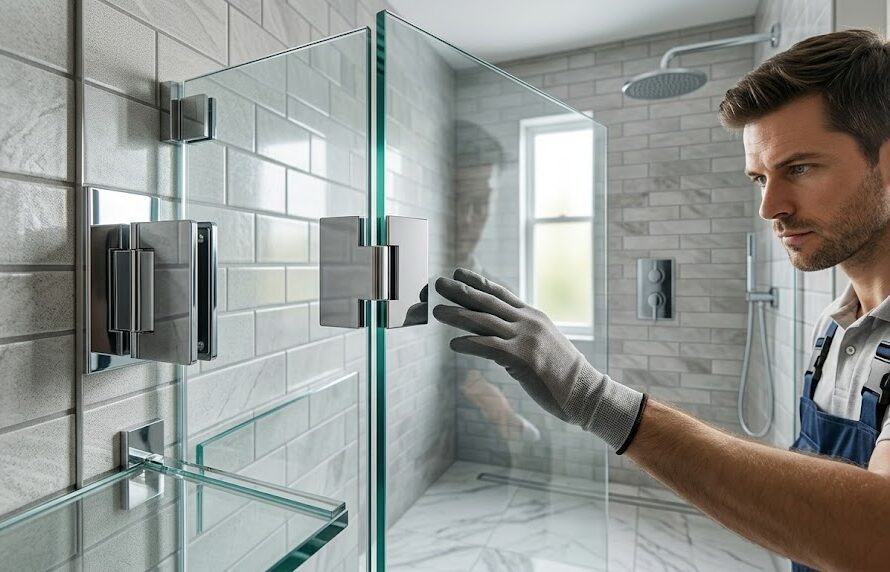
If you’ve been dreaming of that sleek, modern look — unobstructed views, clean lines, and a touch of luxury — glass railing are almost certainly on your radar. But before you commit, you’re probably asking the most sensible question first: how much is this actually going to cost me?
At Berwyn Glass, we believe in complete transparency (pun intended). This 2026 price breakdown covers everything you need to know about glass railing cost — from basic framed systems to high-end frameless designs, installation labor, and the hidden factors that can shift your quote dramatically.
What Is the Average Glass Railing Cost in 2026?
The short answer: glass railing cost typically ranges from $150 to $600 per linear foot, installed. That’s a wide range, and for good reason — the final number depends on the type of system, glass specification, hardware finish, site conditions, and your location.
Here’s a quick-reference table to give you a starting point:
| Railing Type | Glass Railing Price Per Foot (Installed) |
|---|---|
| Framed aluminum glass railing | $150 – $250 |
| Semi-frameless glass railing | $200 – $350 |
| Frameless railing cost | $300 – $600 |
| Custom railing cost (specialty shapes/finishes) | $450 – $900+ |
These figures reflect 2026 material and labor averages across North America. Prices in high-cost urban markets — New York, Toronto, Vancouver, San Francisco — typically sit 20–30% above these benchmarks.
Glass Railing Price Per Foot: Breaking Down the Components
When you receive a railing quote, the cost is made up of several distinct components. Understanding each one helps you compare quotes accurately and avoid overpaying.
1. Glass Panels
The glass itself is the single largest cost driver. Most residential glass railings use tempered safety glass (minimum 3/8″ thick) or laminated tempered glass (two layers bonded with a vinyl interlayer). Laminated glass is heavier, stronger, and significantly safer — it holds together on impact rather than shattering — which makes it the preferred choice for elevated decks, stairs, and commercial applications.
- Standard 3/8″ tempered glass: $25–$45 per square foot (material only)
- 1/2″ tempered glass: $35–$60 per square foot
- Laminated tempered glass: $50–$90 per square foot
- Low-iron (ultra-clear) glass: adds $10–$20 per square foot — eliminates the greenish tint present in standard glass
For a typical 10-foot deck railing section with 36″ panels, you’re looking at roughly 30 square feet of glass. Material costs alone for this single section could range from $750 to $2,700 depending on glass specification.
2. Hardware and Posts
In a framed system, aluminum top and bottom rails do the heavy lifting. In semi-frameless and frameless systems, the hardware (posts, spigots, base plates, and clamps) carries the structural load.
- Standard aluminum framing: $20–$40 per linear foot
- Stainless steel spigot posts (frameless): $80–$180 per post, with posts typically spaced every 4–5 feet
- Surface-mount vs. side-mount bases affect both cost and aesthetics
Hardware finish matters too. Brushed stainless steel, matte black, satin chrome, and powder-coated aluminum all carry different price points — and matte black hardware, currently very popular, typically adds $15–$30 per linear foot compared to standard brushed stainless.
3. Railing Installation Cost
Labor is roughly 30–40% of your total project cost. Railing installation cost varies by region, project complexity, and site accessibility.
- Standard deck railing installation: $50–$100 per linear foot (labor only)
- Staircase railing installation: $80–$150 per linear foot (angled cuts add complexity and time)
- Second-story or difficult-access installations: add 15–25% to labor
Permit fees, if required in your municipality, typically add $100–$500 to the project, sometimes more for commercial work.
Frameless Railing Cost: Is It Worth the Premium?
Frameless glass railings are the gold standard of contemporary design. With no visible posts interrupting the glass panels, they deliver an almost invisible barrier — maximizing views and creating an architectural statement.
Frameless railing cost runs $300–$600 per linear foot installed, compared to $150–$250 for basic framed systems. So what justifies double the price?
- Thicker glass required. Frameless systems rely entirely on the glass for structural rigidity. This means 1/2″ tempered or laminated glass at minimum — often 3/4″ for taller panels.
- Precision engineering. Each panel is measured, cut, and fit individually. There’s no forgiving frame to hide gaps or absorb minor misalignments.
- Higher-grade hardware. The spigots, clamps, and base plates in a quality frameless system are engineered components, not commodity parts.
- Skilled installation. Frameless systems are unforgiving of errors. You’re paying for expertise.
For homeowners with premium properties, pool surrounds, rooftop terraces, or high-end interior staircases, the frameless railing cost is almost always worth it. The visual impact is simply in a different category.
At Berwyn Glass, our frameless systems are built with marine-grade stainless steel hardware and low-iron laminated glass as standard — because a frameless railing is only as good as the components holding it together.
Glass Balustrade Price: Interior vs. Exterior
The term glass balustrade is used interchangeably with glass railing in many markets, though it’s more commonly applied to interior staircases and mezzanines. Glass balustrade price follows the same general framework, with a few important distinctions:
Interior glass balustrades often use a channel (U-channel) base system rather than spigots, which creates a very clean floor-level appearance. Channel systems run $200–$450 per linear foot installed and require precise floor-level work.
Exterior glass balustrades must meet more demanding structural and weather-resistance standards. Fasteners need to be marine-grade stainless (316-grade, not 304), and any wood substrate needs to be properly waterproofed before installation. Expect exterior work to cost 10–20% more than equivalent interior work.
Custom Railing Cost: When Standard Doesn’t Cut It
Sometimes a project calls for something beyond the catalog. Custom railing cost covers situations like:
- Non-standard heights — commercial code often requires 42″ or taller railings vs. residential 36″
- Curved or radius railings — glass can be cold-bent or heat-bent for curved applications; expect to add 30–60% to material costs
- Integrated lighting — LED strip lighting embedded in top caps or base channels adds $20–$60 per linear foot
- Frosted, tinted, or decorative glass — ceramic frit patterns, acid-etched finishes, or colored glass can double the glass panel cost
- Mixed materials — combining glass with wood top rails, cable accents, or custom metalwork adds fabrication time and cost
For true custom railing cost, the only accurate way to get a number is a site visit and detailed quote. At Berwyn Glass, we provide complimentary consultations with detailed itemized proposals — so you know exactly what you’re paying for before any work begins.
Glass Fence Price: Pool and Property Enclosures
Fencing for pools, courtyards, and property boundaries operates under slightly different rules than deck or stair railings. Glass fence price typically runs $200–$500 per linear foot installed, depending on height and system type.
Key considerations for glass fencing:
- Pool codes are strict. Most jurisdictions require a minimum 48″ height for pool fencing, self-closing/self-latching gates, and specific post spacing. Non-compliance can invalidate your home insurance.
- Panels are larger. Full-height pool panels (48″–60″) require thicker, heavier glass and more robust hardware.
- Gates add cost. A quality glass gate with compliant hardware typically runs $800–$2,500 depending on size and specification.
Glass fencing is one of the best investments for pool areas — it removes visual barriers, makes supervision easier, and is far more durable than timber or aluminum alternatives over a 10–20 year horizon.
Factors That Move Your Railing Quote Up or Down
When you request a railing quote, contractors are assessing dozens of variables. Here are the most significant:
Project size. Larger projects benefit from economies of scale. A 200-foot project costs less per foot than a 20-foot project — materials are ordered in bulk, and setup time is amortized across more linear footage.
Site conditions. Is the substrate concrete, steel, timber, or composite? Each requires different anchoring methods. Uneven or sloped surfaces add complexity. Second-story or rooftop access adds risk and time.
Local building codes. Load requirements, minimum heights, and glass specifications vary by jurisdiction. In seismic zones, additional engineering may be required.
Lead times. Custom glass panels are typically fabricated on 2–4 week lead times. Rush orders can add 15–25% to material costs.
Contractor experience. Glass railing installation is a specialty trade. Inexperienced installers make mistakes that are expensive to fix — cracked glass, misaligned posts, leaking base plates. The cheapest quote is rarely the best value.
How to Get an Accurate Railing Quote
The only way to get a truly accurate number is to have a qualified professional assess your specific project. Here’s how to set yourself up for a useful quote:
Measure your linear footage. Walk your perimeter and measure every run, including staircases (measure along the slope, not horizontally).
Note your substrate. What is the railing being mounted to — concrete, timber framing, steel, stone?
Know your code requirements. Your local building department can tell you the minimum height and load specifications required in your area.
Clarify your priorities. Are you optimizing for budget, aesthetics, or longevity? Knowing this helps contractors propose the right system rather than defaulting to the most expensive option.
Get at least three quotes. Compare itemized proposals, not just bottom-line numbers. A lower quote that uses thinner glass, lesser hardware, or skips the permit process is not the same product.
At Berwyn Glass, every quote includes a line-by-line breakdown of materials, hardware, labor, and any applicable permit fees — no surprises when it’s time to invoice.
Glass Railing Cost vs. Other Railing Materials: Is It Worth It?
Let’s put glass railing cost in context against the alternatives:
| Material | Installed Cost Per Linear Foot | Lifespan | Maintenance |
|---|---|---|---|
| Wood railing | $50–$120 | 10–20 years | High (painting, sealing, rot) |
| Cable railing | $130–$250 | 20–30 years | Low–moderate |
| Aluminum railing | $80–$200 | 20–30 years | Very low |
| Glass railing | $150–$600 | 30+ years | Very low |
| Wrought iron | $250–$500 | 30+ years | Moderate (rust prevention) |
Glass railings sit at the higher end of the cost spectrum, but their longevity and near-zero maintenance cost make the lifecycle math favorable. You’re not repainting, re-staining, or replacing corroded cables. A quality glass railing installed today — with proper tempered or laminated panels and marine-grade hardware — should outlast the structure it’s attached to.
Final Thoughts: What Should You Budget?
For a realistic 2026 planning budget:
- Entry-level framed glass railing: $150–$250 per linear foot — appropriate for budget-conscious projects where a clean look matters but frameless isn’t a priority
- Mid-range semi-frameless: $200–$350 per linear foot — the sweet spot for most residential deck and stair projects
- Premium frameless railing: $300–$600 per linear foot — the right choice for high-visibility applications, luxury properties, and anywhere views are the point
- Custom or specialty work: Budget $500–$900+ per linear foot and expect a longer lead time
For a typical 50-linear-foot deck project in a semi-frameless system, a reasonable all-in budget is $12,000–$18,000, including materials, hardware, installation, and permits.
Glass railings are not the cheapest option — but they are consistently one of the most impactful investments you can make in the appearance and long-term value of your property.
Ready to get an accurate number for your specific project? Berwyn Glass offers free on-site consultations with detailed, itemized quotes. Our team brings decades of experience in residential and commercial glass railing installation — and we stand behind every installation with a full workmanship warranty.