
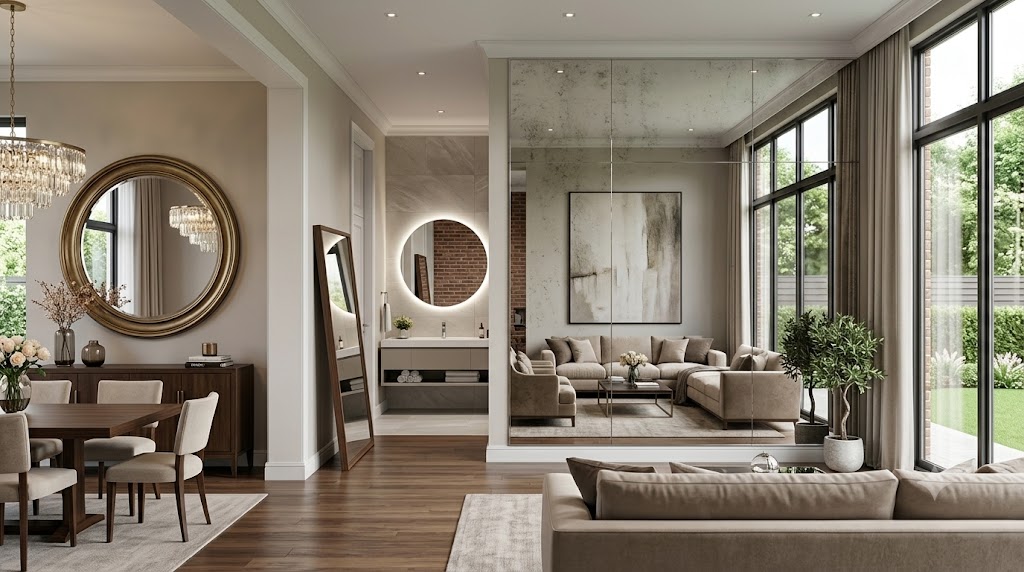
Choosing the Best Types of Mirrors for Your Morgan Property
Mirrors are one of the most versatile and impactful design features a homeowner can add to a property. While their primary purpose is reflection, modern mirrors do much more than assist with daily routines. They can brighten interiors, create the illusion of larger spaces, enhance architectural details, and serve as decorative focal points that elevate the overall appearance of a home.
For homeowners in Morgan, selecting the right mirror involves more than simply choosing a shape or size. Different rooms have different functional requirements, and each mirror style offers unique benefits that can influence how a space looks and feels. Whether updating a bathroom, redesigning a living room, enhancing a bedroom, or creating a welcoming entryway, understanding the various Types of Mirrors available can help homeowners make informed decisions that improve both functionality and aesthetics.
As home design trends continue to evolve, mirrors remain a timeless feature that can complement virtually any architectural style. From contemporary homes to traditional residences, the right mirror can transform ordinary spaces into bright, elegant, and inviting environments.
Why Mirrors Are an Important Investment for Homeowners
Many homeowners view mirrors as simple household necessities, but interior designers recognize them as powerful design tools. Mirrors have the unique ability to improve a room without requiring major renovations or structural changes.
One of the most significant advantages of mirrors is their ability to reflect light. By bouncing natural sunlight and artificial illumination throughout a room, mirrors help create brighter and more welcoming spaces. This effect is particularly valuable in homes where certain rooms receive limited natural light.
Mirrors also influence spatial perception. Properly placed mirrors can make compact areas feel considerably larger by adding visual depth and openness. This benefit is especially useful in smaller bedrooms, hallways, bathrooms, and living spaces.
Beyond their practical advantages, mirrors contribute to a property’s overall aesthetic appeal. Their styles, frames, and finishes can reinforce a home’s design theme while adding sophistication and character.
Understanding the different Types of Mirrors allows homeowners to maximize these benefits and create interiors that feel more spacious, comfortable, and visually balanced.
Understanding Your Property’s Needs Before Choosing a Mirror
Before selecting a mirror, homeowners should consider the specific purpose it will serve. Some mirrors are designed primarily for functionality, while others focus on decorative impact. Many modern mirrors successfully combine both qualities.
Room size is another important factor. Larger mirrors often work best in smaller spaces because they create a stronger illusion of openness. Conversely, decorative mirrors may be more suitable in larger rooms where visual interest and design enhancement are priorities.
Lighting conditions should also be considered. Mirrors positioned near windows can amplify natural light and improve overall brightness. In darker areas, mirrors can help distribute artificial light more effectively.
By evaluating these factors, homeowners can narrow their options and select mirrors that complement both the room and their lifestyle needs.
Wall Mirrors: A Versatile Choice for Any Room
Wall mirrors remain one of the most popular options for residential properties because of their versatility and functionality. Mounted directly onto walls, they conserve floor space while providing significant decorative and practical benefits.
These mirrors work well in living rooms, bedrooms, dining rooms, bathrooms, hallways, and entryways. Depending on their size and design, wall mirrors can serve as subtle accents or dramatic focal points.
Large wall mirrors are particularly effective at increasing brightness and creating a sense of spaciousness. When positioned opposite windows, they reflect natural light and outdoor views, helping interiors feel more open and inviting.
Their adaptability makes wall mirrors one of the most useful mirror options for homeowners seeking both beauty and practicality.
Floor Mirrors for Elegance and Functionality
Floor mirrors have become increasingly popular in modern homes due to their combination of convenience and visual appeal. Unlike wall-mounted options, floor mirrors rest directly on the floor or lean against a wall, creating a more substantial presence within a room.
These mirrors are especially common in bedrooms, dressing rooms, walk-in closets, and entryways. Their large reflective surfaces provide full-body reflections, making them ideal for outfit selection and personal grooming.
In addition to their practical benefits, floor mirrors contribute to a room’s overall design by adding depth, brightness, and sophistication. Their ability to function as both decorative features and everyday necessities makes them a valuable addition to many homes.
Full-Length Mirrors for Daily Convenience
Full-length mirrors are among the most practical Types of Mirrors available. Designed to provide a complete reflection of the body, these mirrors are essential for dressing areas and bedrooms.
Their tall vertical shape also creates a visual effect that can make ceilings appear higher and rooms feel larger. This makes them especially useful in compact spaces where maximizing openness is important.
Available in wall-mounted, freestanding, and leaning styles, full-length mirrors can complement a wide range of interior design themes. Their combination of functionality and aesthetic value makes them a staple feature in modern homes.
Decorative Mirrors as Design Features
Decorative mirrors are selected primarily for their artistic and visual appeal. While they still provide reflection, their main purpose is to enhance a room’s overall design.
These mirrors come in countless styles, including circular designs, geometric patterns, abstract shapes, sunburst motifs, and custom artistic creations. Decorative frames can introduce texture, color, and personality into a space.
Homeowners frequently install decorative mirrors above fireplaces, console tables, dining room buffets, and entryway furniture where they serve as focal points.
Among all Types of Mirrors, decorative mirrors offer some of the greatest opportunities for customization and creative expression.
Frameless Mirrors for Contemporary Homes
Frameless mirrors have become a defining feature of contemporary interior design. Their clean lines and minimalist appearance create a sleek and sophisticated aesthetic that works particularly well in modern homes.
Without a visible frame, these mirrors provide uninterrupted reflection and maximize the perceived size of a room. They are especially popular in bathrooms, home gyms, and minimalist living spaces.
Homeowners who prefer simplicity often choose frameless mirrors because they blend seamlessly into virtually any décor style while maintaining an elegant appearance.
Their understated design makes them a favorite choice for contemporary interiors.
Framed Mirrors for Added Character
While frameless mirrors emphasize simplicity, framed mirrors offer opportunities to introduce decorative elements into a room. The frame itself becomes a design feature that contributes texture, color, and visual interest.
Wood-framed mirrors complement traditional, rustic, and farmhouse interiors. Metal frames work well in industrial and contemporary settings, while ornate decorative frames create a luxurious and timeless appearance.
Because framed mirrors are available in such a wide variety of styles, homeowners can easily find options that align with their existing décor and personal preferences.
Their versatility ensures they remain one of the most enduring mirror choices available.
Bathroom Mirrors and Functional Design
Bathroom mirrors are among the most frequently used mirrors in any home. While they support daily grooming routines, they also play a significant role in bathroom aesthetics.
Modern bathroom mirrors often include advanced features such as LED lighting, anti-fog technology, touch controls, and integrated smart functionality. These innovations enhance convenience while contributing to a more refined appearance.
Large vanity mirrors continue to be especially popular because they maximize reflected light and create a spacious feel. Frameless designs remain common in contemporary bathrooms due to their clean and modern look.
Investing in a quality bathroom mirror can improve both functionality and visual appeal.
Smart Mirrors for Modern Living
Technology is transforming residential design, and smart mirrors represent one of the most innovative developments in the industry.
Smart mirrors combine traditional reflection with digital features such as weather forecasts, calendars, news updates, fitness tracking, and smart-home controls. Some models also include voice assistants and touchscreen capabilities.
These mirrors are particularly useful in bathrooms, dressing areas, and home gyms where homeowners can benefit from their interactive functionality.
As smart-home technology becomes more widespread, smart mirrors are expected to become increasingly common in residential properties.
Comparison of Popular Mirror Types
| Mirror Type | Primary Benefit | Best Location |
|---|---|---|
| Wall Mirror | Enhances light and saves space | Living rooms, hallways |
| Floor Mirror | Full-body reflection and style | Bedrooms, entryways |
| Full-Length Mirror | Dressing convenience | Closets, bedrooms |
| Decorative Mirror | Creates visual focal points | Dining rooms, living rooms |
| Frameless Mirror | Modern appearance | Bathrooms, gyms |
| Framed Mirror | Adds personality and texture | Any room |
| Bathroom Mirror | Daily functionality | Bathrooms |
| Smart Mirror | Technology integration | Bathrooms, dressing rooms |
How Mirror Placement Impacts Results
Even the best mirror may fail to deliver its full benefits if placed incorrectly. Strategic placement is essential for maximizing light, improving spatial perception, and enhancing overall design.
Mirrors positioned opposite windows can significantly increase natural light throughout a room. They can also be used to reflect attractive views, artwork, or architectural features.
Homeowners should avoid placing mirrors where they reflect cluttered areas, as this can make spaces feel busier and less organized. Instead, mirrors should be positioned to emphasize the room’s most appealing elements.
Thoughtful placement ensures homeowners achieve the greatest possible value from their mirror investment.
Common Mistakes to Avoid When Selecting Mirrors
One common mistake is choosing a mirror that is too small for the space. Undersized mirrors often fail to provide the desired visual impact and may appear out of proportion.
Another mistake is focusing solely on appearance without considering functionality. A mirror should support the room’s intended purpose while complementing its design.
Improper frame selection can also affect the overall aesthetic. Choosing a frame style that conflicts with existing décor may create visual inconsistency.
By carefully considering size, style, placement, and functionality, homeowners can avoid these issues and select mirrors that enhance their property effectively.
Frequently Asked Questions
1. What mirror type is best for making a room look larger?
Large wall mirrors and floor mirrors are particularly effective at creating the illusion of additional space.
2. Are frameless mirrors suitable for traditional homes?
While frameless mirrors are most commonly associated with modern interiors, they can work in traditional homes when paired with complementary design elements.
3. Which mirror style works best in entryways?
Floor mirrors, decorative mirrors, and full-length mirrors are popular choices because they combine functionality with visual appeal.
4. Are smart mirrors worth the investment?
For homeowners interested in convenience and modern technology, smart mirrors can provide valuable functionality and enhance daily routines.
5. How should mirrors be positioned for maximum natural light?
Mirrors should ideally be placed opposite or adjacent to windows where they can reflect incoming sunlight throughout the room.
Conclusion
Selecting the right Types of Mirrors for a Morgan property involves balancing functionality, aesthetics, room size, and design preferences. From versatile wall mirrors and elegant floor mirrors to decorative statement pieces, frameless options, and advanced smart mirrors, each style offers unique advantages that can enhance a home’s comfort and appearance. By choosing mirrors thoughtfully and placing them strategically, homeowners can create brighter, more spacious, and visually appealing interiors. For professional mirror and glass solutions tailored to your home, Berwyn Glass provides expert craftsmanship and personalized service to help transform any space with high-quality custom mirror installations.