
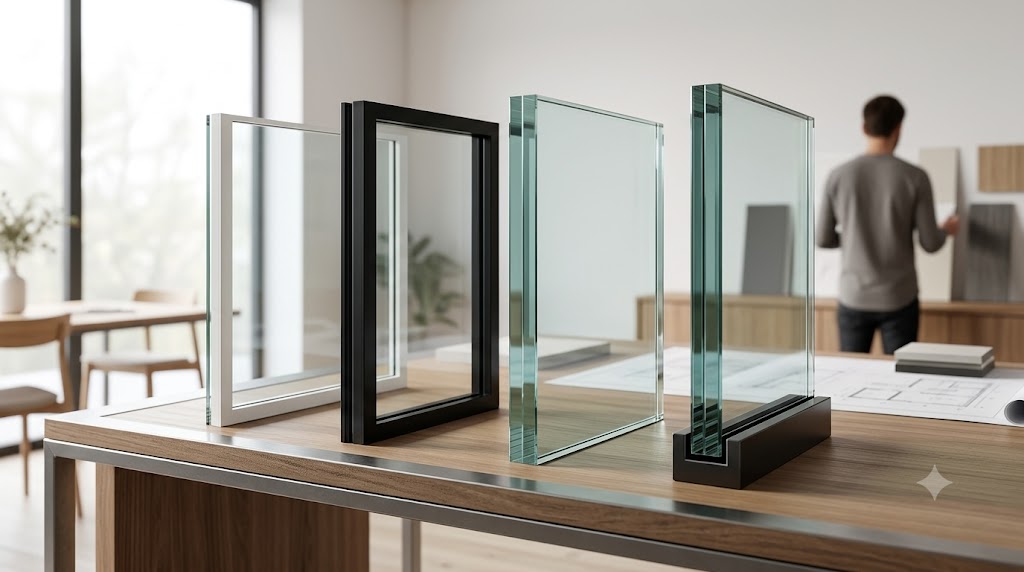
Glass thickness guide: 4mm, 6mm, 8mm and 10mm explained for homeowners
If you’ve ever replaced a window, installed a shower screen, or considered a glass balustrade, you’ve likely been asked a question that sounds deceptively simple: “What thickness do you need?” For most homeowners, this is where confusion sets in. Do you need 4mm or 6mm glass? When should you go up to 8mm or 10mm? And what’s the difference between standard glass and tempered glass thickness?
This glass thickness guide is designed to take the guesswork out of the process. At Berwyn Glass, we work with homeowners every day to match the right glass specification to the right application — safely, practically, and cost-effectively. Whether you’re glazing a conservatory, fitting a frameless shower enclosure, or adding a glass partition to your home, this guide will help you make an informed decision.
Why Glass Thickness Matters More Than You Think
Glass thickness affects far more than just strength. It influences sound insulation, thermal performance, safety compliance, weight, and long-term durability. Choosing the wrong thickness can mean a pane that rattles in the wind, a panel that shatters under minimal impact, or a structure that doesn’t meet building regulations.
A common mistake homeowners make is assuming thicker always means better. In reality, every application has an optimal thickness range — going too heavy adds unnecessary weight and cost, while going too light creates genuine safety risks.
This glass thickness guide walks you through the four most common options available at Berwyn Glass — 4mm, 6mm, 8mm, and 10mm — so you can match your project to the right specification.
4mm Glass: Lightweight and Versatile for Everyday Use
Best for: Picture frames, internal windows, cabinet glazing, secondary glazing, small fixed panels
4mm glass is the thinnest option in most residential applications and is best suited to low-risk, interior uses. It’s lightweight, cost-effective, and easy to handle, making it a practical choice where structural demand is minimal.
You’ll commonly find 4mm glass used in:
- Picture frames and display cases — where optical clarity matters more than strength
- Cabinet doors — kitchen or living room cabinets with glass inserts
- Internal partitions — lightweight room dividers that don’t bear load
- Secondary glazing — fitted inside existing window frames to add insulation
What 4mm glass is not suitable for is anywhere that requires impact resistance, significant spanning, or compliance with safety glass standards. It does not meet the threshold for safety glass guide requirements in most load-bearing or accessible glazing positions.
Glass weight chart note: 4mm glass typically weighs around 10 kg per square metre. For a standard 500mm × 500mm panel, that’s approximately 2.5 kg — light enough to handle without specialist equipment.
6mm Glass: The Most Popular All-Rounder
Best for: Internal doors, larger windows, shower screens, office partitions, furniture glass
6mm glass is the most widely used thickness in domestic settings — and for good reason. It offers a significant step up in strength over 4mm, while remaining manageable in weight and relatively affordable. If you’re fitting a new window or replacing a glass panel in an interior door, 6mm is almost always the recommended starting point.
At Berwyn Glass, 6mm glass accounts for a large proportion of our domestic orders because it sits in a sweet spot between performance and practicality.
Common uses for 6mm glass:
- Interior glazed doors — the standard choice for glass-panelled internal doors
- Shower enclosures — when combined with a robust frame (frameless enclosures typically require thicker glass)
- Shelving — glass shelves in bathrooms or living rooms up to around 600mm span
- Shop display units and countertops — for lighter retail applications
- Balcony infill panels — in framed systems with adequate support
It’s worth noting that 6mm glass used in accessible or overhead positions usually needs to be specified as tempered glass. Toughened 6mm glass is several times stronger than standard annealed glass of the same thickness, breaking into small, relatively safe fragments rather than sharp shards.
Glass weight chart note: 6mm glass weighs approximately 15 kg per square metre — about 50% heavier than 4mm but still manageable for most installation scenarios.
8mm Glass: Where Strength and Style Meet
Best for: Frameless shower enclosures, larger glazed doors, structural partitions, pool fencing
Step up to 8mm glass and you’re entering more structural territory. This is the go-to thickness for frameless and semi-frameless shower enclosures — one of the most common requests we receive at Berwyn Glass. It’s also popular for statement glazing in contemporary homes: full-height room dividers, walk-in wardrobe fronts, and large sliding glass panels.
8mm glass has enough inherent rigidity to remain stable without relying entirely on a frame for support. This is what makes it suitable for frameless applications where the glass itself provides some structural function.
Where 8mm glass excels:
- Frameless shower enclosures — the minimum recommended thickness for a fully frameless design
- Glass room dividers — where panels span a significant height without intermediate support
- Pool fencing — when used in a framed or semi-frameless system
- Large glazed internal doors — for a sleek, solid feel
- Balustrading infill panels — in low-level framed balustrade systems
For most 8mm applications in accessible positions — including shower screens, doors, and partitions — tempered glass (toughened glass) is not just recommended, it’s required under UK safety regulations. Toughened 8mm glass must conform to BS EN 12150-1 and is manufactured by heating standard glass to over 600°C before rapid cooling, dramatically increasing both strength and safe breakage characteristics.
Glass weight chart note: 8mm glass weighs approximately 20 kg per square metre. A standard 800mm × 2000mm shower panel weighs around 32 kg — manageable with two people but worth factoring into your installation plan.
10mm Glass: Heavy Duty for High-Demand Applications
Best for: Structural balustrades, large frameless shower walls, floor-to-ceiling partitions, commercial-grade domestic features
10mm glass is the heaviest standard option most homeowners will encounter in a residential setting. It’s specified when structural integrity is the primary concern, typically in applications where the glass must stand unsupported over a significant span or height.
You’ll find 10mm glass used most commonly in:
- Glass balustrades and staircases — especially frameless channel-fixed systems where the glass is the structural element
- Juliet balconies — where the glass panel forms the entire guard
- Large-format frameless shower walls — for walk-in wet room designs with no frame
- Structural glass fins — used in contemporary architecture to support larger glazed areas
- Pool enclosures and heavy-duty pool fencing — where impact and wind loading is a concern
10mm glass thickness is almost always specified as toughened safety glass and, in higher-risk situations such as overhead or floor-level applications, may also need to be laminated. Laminated safety glass bonds two panes together with an interlayer so that if the glass breaks, the fragments remain bonded to the interlayer rather than falling free.
A note on building regulations: In the UK, glazing in critical locations — including within 800mm of floor level, in doors, and in panels adjacent to doors — must comply with Part N of the Building Regulations (now incorporated into Approved Document K). At Berwyn Glass, our team can advise which specifications meet your specific regulatory requirements.
Glass weight chart note: 10mm glass weighs approximately 25 kg per square metre. A 1000mm × 1100mm balustrade panel weighs around 27.5 kg. Always plan for adequate structural support at fixings.
Glass Weight Chart: Quick Reference
Understanding glass weight is essential for planning structural fixings, choosing appropriate hardware, and ensuring safe handling on site. Here’s a quick reference for standard clear float glass:
| Thickness | Weight per m² | Typical Application |
|---|---|---|
| 4mm | ~10 kg/m² | Picture frames, cabinets, secondary glazing |
| 6mm | ~15 kg/m² | Internal doors, windows, framed shower screens |
| 8mm | ~20 kg/m² | Frameless shower enclosures, partitions |
| 10mm | ~25 kg/m² | Balustrades, structural glazing, Juliet balconies |
Weights are approximate for standard clear float glass. Laminated or coated variants may differ slightly.
Tempered Glass Thickness: What You Need to Know
Throughout this safety glass guide, we’ve referenced toughened (tempered) glass repeatedly — and for good reason. In the UK, the terms “toughened” and “tempered” are used interchangeably, and this type of glass is mandatory in the majority of residential glazing applications that involve:
- Doors and door surrounds
- Low-level glazing (below 800mm from floor level)
- Shower enclosures and wet areas
- Staircase balustrades and guarding
- Overhead or sloped glazing
Tempered glass thickness follows the same nominal measurements as standard glass — so you can have toughened 6mm, 8mm, or 10mm glass — but its performance characteristics are entirely different. Toughened glass is approximately four to five times stronger than standard annealed glass of the same thickness. When it does break, it shatters into small, blunt-edged fragments rather than large, blade-like shards.
One important practical note: toughened glass cannot be cut, drilled, or edged after the tempering process. All sizing, notching, and drilling must be completed before the glass goes through the tempering furnace. This is why accurate measurements and careful planning with your glass supplier are essential before ordering.
At Berwyn Glass, we process all toughened orders in-house, ensuring full traceability and compliance with BS EN 12150-1.
How to Choose the Right Glass Thickness for Your Project
Still unsure which thickness is right for you? Here’s a simple decision framework:
Start with the application. Is the glass in a door, a window, a shower, or a structural balustrade? The application almost always dictates the minimum safe thickness.
Consider the span. The wider and taller the unsupported panel, the thicker it needs to be. A 300mm × 300mm cabinet panel behaves very differently to a 1000mm × 2100mm shower enclosure.
Check for regulatory requirements. If the glazing is in a critical location as defined by UK building regulations, you’ll need safety (toughened or laminated) glass regardless of thickness.
Factor in weight. Heavier glass requires more robust fixings, stronger frames, and more careful handling. This affects both installation cost and timeline.
Get professional advice. The above framework gives you a solid starting point, but every project has unique variables. The team at Berwyn Glass offers free consultations and can provide cut-to-size glass with all edges polished and safety specification applied.
Summary: Glass Thickness at a Glance
| Thickness | Strength | Best Use Case | Safety Glass Required? |
|---|---|---|---|
| 4mm | Low | Cabinets, frames, secondary glazing | Generally no |
| 6mm | Medium | Windows, framed doors, framed showers | In accessible positions |
| 8mm | High | Frameless showers, partitions | Yes, for most uses |
| 10mm | Very High | Balustrades, structural glazing | Yes, always |
Need Help Choosing? Talk to Berwyn Glass
Whether you’re working through a straightforward window replacement or planning a statement glass staircase, Berwyn Glass is here to help you get the specification right the first time. We supply and install 4mm, 6mm, 8mm, and 10mm glass in toughened, laminated, and standard variants — cut to your exact dimensions, with all edge work and drilling completed before delivery.
Our team brings decades of experience advising homeowners, builders, and designers across the region. Get in touch today for a no-obligation quote, and let us take the complexity out of your glass project.
Berwyn Glass — Precision cut, safety certified, delivered to your door.