
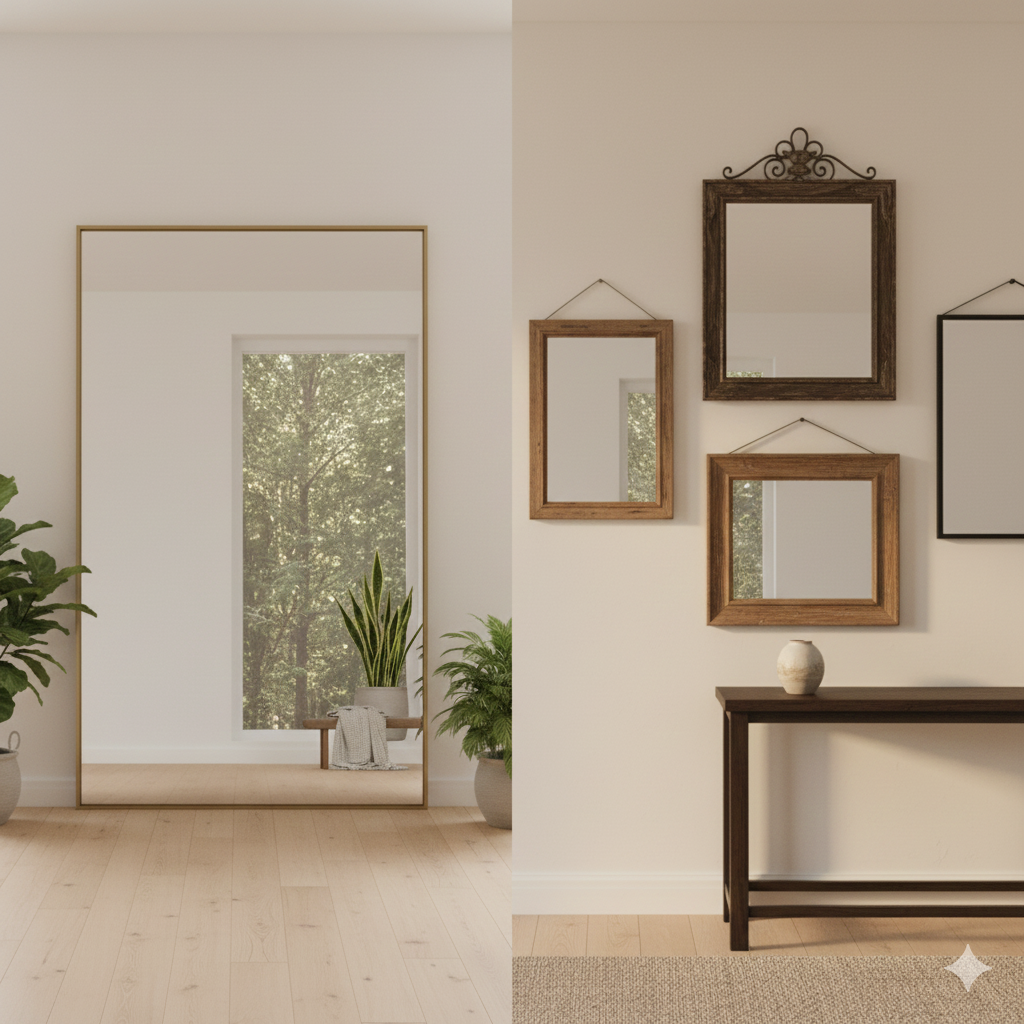
Plane Mirror vs Framed Mirrors: Which Fits Your Style?

Picking between a plane (frameless) mirror and a framed mirror changes how a room looks and works—get it right and you avoid costly design do-overs. This guide defines plane mirrors, explains how framed mirrors differ in material and visual impact, and recommends what works best by room and installation needs. Homeowners, designers, and small-business owners will find clear trade-offs—alignment, edge finish, durability, and maintenance—so you can match mirror style to purpose. Berwyn Glass Co. fabricates and installs both frameless and framed mirrors and offers design consultations and local estimates to move your decision from sketch to installation. Read on for feature comparisons, suggested edge and frame materials, room-by-room guidance, installation notes, and care tips to keep your mirror looking great.
What Are Plane Mirrors and Their Key Features?
A plane mirror in gladwyne—often called a frameless mirror—is a flat reflective surface that gives an undistorted view and makes spaces feel larger. It’s typically tempered glass with a consistent silver backing that reflects light evenly, increasing perceived depth and brightness in small or modern rooms. Practical benefits include seamless coverage for full-width vanities, clean alignment with contemporary fixtures, and the ability to create large mirror walls without visual breaks. Knowing these features helps you choose edge finishes and installation methods that protect the glass and match your design goals.
How Do Frameless Mirrors Enhance Modern and Minimalist Spaces?
Frameless mirrors support minimalist design by removing visual frames and letting fixtures and finishes take center stage. Their uninterrupted reflective plane extends sightlines and creates a feeling of openness—especially effective in compact bathrooms and contemporary vanities. Polished or beveled edges give a refined finish without bulk, and frameless mirrors pair easily with chrome, matte black, or brushed hardware for a cohesive palette. If you want clean lines and maximum light, a frameless mirror is a simple, architectural choice that complements modern interiors.
What Are the Functional Advantages of Plane Mirrors?

Frameless plane mirrors offer practical benefits beyond looks: flexible sizing, fewer seams on large installations, and an easier-to-clean surface. Without a bulky frame, they can span walls or vanities to create continuous reflection that visually enlarges a room and improves light distribution. The trade-off is edge vulnerability—polished or beveled edges and tempered glass lower the risk of chips, and professional mounting with adhesive pads or hidden brackets reduces stress on cut edges. Choosing tempered glass adds safety and durability for high-use areas like bathrooms and salons.
What Defines Framed Mirrors and Their Design Versatility?

Framed mirrors are a glass panel surrounded by a visible border that both decorates and protects the edge. A frame transforms a mirror from a practical surface into a room anchor—adding texture, color, and scale that support traditional, industrial, or eclectic styles. Frames also shield the glass perimeter from impacts and offer mounting options that distribute weight differently than frameless installations. Understanding these traits makes it easier to match frame material and finish to the room’s function and durability needs.
Which Frame Materials and Styles Are Popular for Decorative Mirrors?
Frame materials span a wide range, each with its own look, lifespan, and price point to suit different interiors. Wood frames add warmth and pair well with farmhouse or classic décor but respond to humidity. Metal frames—available in matte black, brushed nickel, and other finishes—fit modern or industrial spaces and can resist moisture when sealed correctly. Resin and composite frames let you get ornate profiles at lower cost and offer a lightweight option for eye-catching pieces.
The table below summarizes common frame materials, their characteristics, and where they work best so you can compare options at a glance.
| Frame Material | Durability / Style | Typical Cost | Best Applications |
|---|---|---|---|
| Wood | Warm, classic; moderate durability; sensitive to humidity | Mid | Bedrooms, mantels, living rooms |
| Metal (matte black/brushed nickel) | Sleek, durable; corrosion-resistant when sealed | Mid-high | Modern bathrooms, entryways, industrial lofts |
| Resin / Composite | Lightweight, ornate detailing, budget-friendly | Low-mid | Decorative accent mirrors, rental properties |
These comparisons show how frame choice supports both looks and function, helping you pick the right material for the room’s conditions.
Mirrors do more than reflect—they shape light, scale, and mood to transform a space.
Mirror Materials in Interior and Landscape Design
Mirrors are widely used in interior and landscape design not just for decoration but for extending space and creating interesting light effects. Their design potential is strong: through new shapes, materials, and processes, mirrors can redefine existing spaces. This study reviews how mirror materials are applied in interiors and landscapes, highlights design strategies, and profiles successful projects to show practical results.
Research on Mirror Materials in Interior and Landscape, 2021
How Do Framed Mirrors Serve as Focal Points in Traditional and Eclectic Interiors?
Framed mirrors act as visual anchors by providing a defined edge that contrasts with surrounding textures and furniture. A framed mirror above a mantel, dresser, or console directs sightlines and balances vertical or horizontal furniture. Choosing the right scale prevents a mirror from overpowering or disappearing against architectural elements. Custom sizes and finishes let framed mirrors become signature pieces that reflect personal style and tie mixed décor together. Thoughtful placement and proportion ensure the mirror enhances the room rather than competing with it.
How Do Plane Mirrors Compare to Framed Mirrors?
Picking between frameless plane mirrors and framed mirrors means weighing aesthetics, durability, installation complexity, maintenance, and cost against your design priorities. Frameless mirrors emphasize continuous planes and modern minimalism; framed mirrors add decorative presence and edge protection. Frameless edges require careful finishing and mounting to avoid chipping, while frames add protection but can complicate replacement or resizing. Installation methods differ—concealed adhesives for frameless pieces versus brackets and cleats for framed mirrors—which affects labor and long-term stability.
A direct comparison of attributes makes it easier to choose the right mirror type for your space.
| Attribute | Frameless (Plane) Mirror | Framed Mirror |
|---|---|---|
| Aesthetics | Clean, seamless, modern minimalism | Decorative, anchoring, varied styles |
| Durability | Edge-sensitive; needs polished/beveled edges | Protected edges; frame absorbs impact |
| Installation | Adhesive pads, clips; precise measurement required | Hanging brackets, cleats; easier replacement |
| Maintenance | Simple surface cleaning; avoid edge saturation | Clean mirror and frame separately per material |
| Typical Cost Factors | Glass size, edge finish, installation labor | Frame material, ornamentation, fabrication cost |
In short: frameless mirrors create uninterrupted visual planes; framed mirrors provide stylistic weight and extra edge protection.
What Are the Differences in Aesthetics and Visual Impact?
Frameless plane mirrors produce an open, uninterrupted reflection that boosts light and perception of space—perfect for contemporary, minimalist interiors. Framed mirrors place a visible boundary that can emphasize color, texture, or period detail, functioning like wall art in traditional or eclectic rooms. Scale matters: a large frameless panel can make a small bathroom feel bigger, while a substantial framed mirror can serve as a room’s centerpiece. Your choice depends on whether you want seamless extension of space or a framed object that organizes visual attention.
How Do Durability, Installation, and Maintenance Differ Between Mirror Types?
Durability depends on edge protection and mounting: frameless mirrors need polished or beveled edges and careful adhesive installation to reduce chipping; framed mirrors gain mechanical protection from their frames. Installation varies—frameless setups often use adhesives or concealed clips that demand precision, while framed pieces mount with brackets or cleats that distribute weight. Maintenance differs by material: frameless surfaces require non-abrasive cleaners and dry edges; framed mirrors need material-specific care for wood, metal, or resin. Professional installation lowers risk and ensures the proper hardware for both types.
What Are the Typical Cost Considerations for Frameless vs Framed Mirrors?
Costs hinge on size, edge finish, frame material, and installation complexity rather than a simple frameless-versus-framed split. Frameless mirrors may be cheaper in raw materials but can require higher fabrication and precise installation labor for large seamless panels and refined edges. Framed mirrors range widely: simple metal frames are more affordable, while bespoke wood or handcrafted frames raise the price. Custom sizes, beveled or polished edges, and tempered glass increase costs for both. Look at total value—maintenance, replacement ease, and how well the solution meets functional needs.
Which Mirror Style Fits Your Room and Personal Taste Best?
Choosing the right mirror combines room function, scale, and decorative intent so the mirror supports daily use and design coherence. Consider practical needs—bathroom humidity, proximity to furniture, or full-length reflection—alongside aesthetic goals like minimalism or ornamentation. Size and placement determine whether a frameless or framed mirror better achieves the desired look and performance.
These room-based suggestions match mirror attributes to common scenarios for quicker decisions.
- Bathroom / Small Space: Frameless plane mirrors maximize perceived space and light.
- Bedroom / Above Dresser: Framed mirrors coordinate with furniture and add decorative balance.
- Living Room / Large Walls: Use a large framed mirror as a statement piece, or a frameless wall for contemporary continuity.
These targeted recommendations help move your choice from concept to site-specific solution.
When Should You Choose a Frameless Mirror for Your Bathroom or Small Space?
Choose frameless mirrors in bathrooms and tight spaces when enlarging visual volume and maximizing light are priorities—the continuous surface reduces visual clutter.
For full-width vanities, a single frameless panel creates an uninterrupted plane that’s easy to clean and pairs neatly with modern faucets and lighting.
Specify polished or beveled edges to reduce chipping and opt for tempered glass for safety in wet environments.
For modern bathroom projects, Berwyn Glass Co.’s grid shower enclosures offer a contemporary, architectural detail that complements frameless mirrors.
Professional measurement and installation prevent edge stress and ensure the adhesive or concealed clips are right for humidity-prone areas.
When Are Framed Mirrors Ideal for Bedrooms, Living Rooms, or Large Walls?
Framed mirrors are best when you want decorative emphasis, texture, or historical character—above mantels, dressers, or consoles where frames echo furniture finishes.
Match frame scale to surrounding pieces—wider frames ground a space, while thinner profiles read as modern accents.
On large walls, grouped framed mirrors or oversized custom frames create a curated, gallery-like effect and can mirror architectural detailing.
Custom fabrication ensures frame proportions and materials integrate seamlessly with existing décor.
How Does Berwyn Glass Co. Customize and Install Your Perfect Mirror?
Berwyn Glass Co. delivers custom mirror solutions and precise installation to turn design ideas into durable, professionally mounted results for homes and businesses. We work with frameless plane mirrors and framed options, advising on tempered glass, edge finishes, and frame selections tailored to your project. In addition to custom mirrors, we install elegant, space-saving sliding shower doors to optimize bathroom layouts. Our focus is craftsmanship, accurate installation, and high-quality materials—so each mirror meets aesthetic and safety expectations. Contact us for an estimate or design consultation and local project guidance.
What Is the Custom Mirror Installation Process at Berwyn Glass Co.?
Our process begins with a design consultation to pin down size, edge finish, and frame choice, followed by precise site measurements for a perfect fit. We fabricate using tempered glass and the specified edge treatment—polished or beveled—then schedule delivery and professional installation with the right mounting hardware. Installers finish with leveling, secure attachment, and a quality inspection to confirm stability and appearance. This step-by-step approach reduces edge stress, ensures correct hardware, and delivers a polished result that matches your design intent.
Why Choose Professional Installation for Durability and Safety?
Professional installation reduces risks like edge chipping, uneven load distribution, and insecure mounting that can cause damage or safety issues over time.
Experienced installers select the correct hardware—clips, adhesive systems, or cleats—based on mirror type and substrate to ensure long-term stability and minimize breakage risk.
Warranties and quality control that come with professional service protect your investment and give peace of mind. When finish quality and safety matter, professional installation is a smart, cost-effective choice.
What Are the Best Practices for Caring for Frameless and Framed Mirrors?
Good care preserves mirror clarity and frame condition, extending service life and keeping appearance consistent in humid or high-use areas. Start with non-abrasive cleaning applied with a microfiber cloth and avoid soaking edges to protect the backing; frames need material-specific care to stay looking their best. Regular checks for loose hardware, edge chips, or frame separation catch small problems before they grow. The guidance below gives simple cleaning and maintenance steps tailored to mirror type and frame material.
How Do You Clean and Maintain Frameless Mirrors?
Clean frameless mirrors with a mild, non-ammonia glass cleaner and a lint-free microfiber cloth—wipe in vertical strokes then finish horizontally to reduce streaks. Avoid abrasive pads that can scratch the surface.
Do not saturate the mirror edge; spray cleaner on the cloth and wipe gently, leaving edges dry to protect the silver backing and sealants.
For anti-fog or LED mirrors, follow the manufacturer’s instructions and avoid solvents that could damage electronics or coatings.
Regular, gentle cleaning and periodic inspection for edge nicks help preserve appearance and reflective quality.
What Are the Care Recommendations for Different Frame Materials?
Frame-specific care keeps materials stable and finishes fresh: wood frames benefit from occasional wood-safe polish and humidity control; metal frames should be wiped dry after moisture exposure to avoid corrosion; resin frames respond well to gentle dusting and mild soap for stubborn dirt.
Use cleaners suited to each material and test on a small area before applying widely to ensure compatibility with finishes.
In bathrooms, consider protective sealants or improved ventilation to limit moisture exposure for sensitive frames.
Timely maintenance keeps frames in harmony with the mirror surface and reduces long-term repair needs.
For tailored advice or to schedule a design consultation and custom mirror estimate, contact Berwyn Glass Co. Our local experience, commitment to craftsmanship, and precise installation help ensure your frameless or framed mirror fits both your style and functional needs.
Frequently Asked Questions
What are the best mirror styles for small bathrooms?
For small bathrooms, frameless plane mirrors are often the top pick. Their uninterrupted surface makes the room feel larger and brighter. They can be custom-sized to span a vanity for a clean, seamless look. For safety and durability, choose tempered glass with polished or beveled edges to reduce chipping—an ideal mix of form and function in compact spaces.
How can I enhance the lighting in my room using mirrors?
Mirrors boost a room’s light by reflecting natural and artificial sources. Position mirrors opposite windows or light fixtures to bounce light around the space. Large frameless mirrors are excellent in modern layouts for broad, even reflection; multiple smaller mirrors can create layered depth and add visual interest while increasing overall illumination.
What should I consider when choosing a mirror for a rental property?
For rentals, prioritize lightweight, budget-friendly options like resin or composite frames that are easy to hang and remove without damaging walls. Frameless mirrors mounted with adhesive pads can also leave minimal marks. Choose neutral styles that appeal to many tastes and focus on durability and low-maintenance finishes for long-term tenant use.
How do I determine the right size mirror for my space?
Pick a mirror that fits the scale of the room and the furniture it complements. A common rule: choose a mirror about two-thirds the width of the furniture it hangs above, such as a dresser or vanity. For large walls, oversized mirrors make a strong statement. Also confirm height for intended use—full-length for bedrooms, or eye-level for vanities—to balance function and aesthetics.
What are the maintenance tips for keeping mirrors in good condition?
Clean mirrors regularly with a non-abrasive glass cleaner and a microfiber cloth to avoid scratches. For frameless mirrors, keep edges dry to protect the backing. For framed mirrors, use cleaners suited to the frame material. Inspect hardware and edges periodically and address chips or loose fittings promptly. Ensure good ventilation in bathrooms to limit moisture exposure.
Can mirrors be used to create a specific design theme?
Absolutely. Framed mirrors with ornate detailing enhance traditional or eclectic spaces, while sleek frameless mirrors support modern, minimalist looks. Frame material—wood, metal, or resin—also contributes to the room’s style. Thoughtful placement lets mirrors act as focal points that reinforce a design theme, boost light, and tie together color and texture choices.
Conclusion
Choosing between plane and framed mirrors impacts both how a room functions and how it feels. Frameless designs deliver minimalist continuity and light; framed mirrors bring decorative weight and edge protection. Understanding these differences helps you select the right solution for your space. For custom recommendations and professional installation, reach out to Berwyn Glass Co. — we’ll help you find the mirror that fits your design and performs reliably.