Tempered vs laminated glass: which is safer and when to use each?
When it comes to choosing the right glass for your home, office, or commercial project, the debate around tempered vs laminated glass is one that comes up constantly. Both are classified as safety glass types, and both are engineered to perform far beyond standard annealed glass — but they are built differently, behave differently under stress, and are best suited to different situations.
At Berwyn Glass, we help homeowners, contractors, and architects make informed decisions every day. This guide breaks down everything you need to know about tempered glass safety, laminated glass uses, building code glass requirements, and how to choose the right option for your specific application.
What Is Tempered Glass?
Tempered glass — also known as toughened glass — is produced through a controlled thermal process. Standard glass is heated to roughly 620°C and then rapidly cooled using high-pressure air jets. This process, called quenching, creates a glass surface that is under compression while its inner core remains in tension. The result is a pane that is approximately four to five times stronger than regular glass of the same thickness.
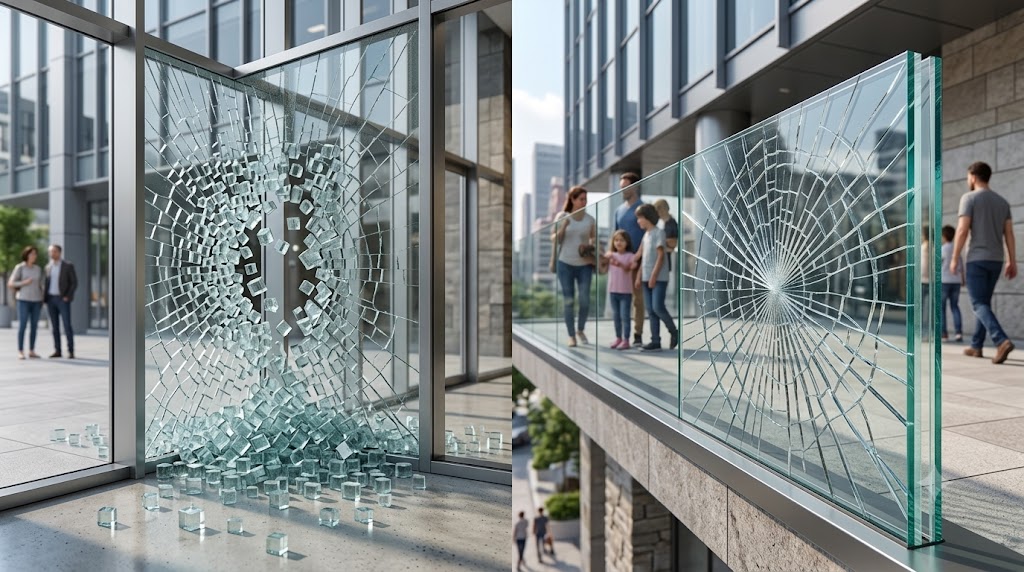
The defining feature of tempered glass safety is how it breaks. When a tempered pane is compromised, it does not shatter into long, jagged shards. Instead, it fractures into small, blunt, pebble-like pieces that significantly reduce the risk of deep lacerations. This characteristic is precisely why tempered glass is mandated under building code glass regulations across many jurisdictions.
Common Uses of Tempered Glass
- Shower enclosures and bathroom doors
- Glass doors and sliding patio doors
- Side and rear automotive windows
- Oven doors and kitchen appliances
- Glass table tops and furniture
- Storefront entrances and interior partitions
- Sports facilities and gymnasiums
One critical limitation: once tempered glass is processed, it cannot be cut, drilled, or reworked. Any modification must happen before the tempering process. At Berwyn Glass, all custom cutting and edge work is completed prior to tempering to ensure the final product meets exact specifications without compromise.
What Is Laminated Glass?
Laminated glass is created by bonding two or more panes of glass together using one or more interlayers — most commonly polyvinyl butyral (PVB) or ethylene-vinyl acetate (EVA). These interlayers are fused between the glass layers under heat and pressure, creating a composite unit.
The key characteristic of laminated glass is what happens during glass breakage. Unlike tempered glass, laminated glass does not fall apart when broken. The interlayer holds the broken fragments in place, maintaining the structural integrity of the pane even after impact. This “broken but intact” behavior is what makes laminated glass the preferred choice for overhead glazing, vehicle windshields, and hurricane-rated windows.
Laminated glass also offers functional benefits beyond impact resistance. The PVB interlayer absorbs a significant portion of UV radiation, blocks sound transmission, and can even be combined with tinted or frosted film for added privacy. These multi-functional properties make laminated glass a versatile solution for both safety and performance-driven applications.
Common Uses of Laminated Glass
- Windshields and automotive front glass
- Skylights and overhead glazing
- Hurricane and storm-resistant windows
- Bank and security glazing
- Sound-reducing partitions and facades
- Museum display cases and art protection
- Balustrades and structural glass flooring
Tempered vs Laminated Glass: Key Differences at a Glance
| Feature | Tempered Glass | Laminated Glass |
|---|---|---|
| Strength | 4–5× stronger than standard glass | Depends on thickness and interlayer |
| Breakage Pattern | Small blunt granules | Holds together; cracks but stays in frame |
| Safety After Break | Granules fall away | Fragments remain bonded to interlayer |
| Post-Break Barrier | No — opening created | Yes — remains in place |
| UV Protection | Minimal | Up to 99% UV blockage |
| Sound Insulation | Standard | Enhanced with PVB interlayer |
| Reworkable? | No — must be sized before tempering | Yes — can be cut after lamination |
| Cost | Generally lower | Generally higher |
| Typical Application | Shower screens, doors, partitions | Windshields, skylights, security glass |
Glass Safety Standards: What the Building Codes Say
Understanding building code glass requirements is essential before selecting a product. In the United States, the International Building Code (IBC) and ANSI Z97.1 standard specify where safety glazing is required. Both tempered and laminated glass can meet these requirements, but the application determines which is appropriate.
Tempered glass is typically required in:
- Doors (both swinging and sliding)
- Sidelites adjacent to doors (within 24 inches of the door edge)
- Glazing in wet areas such as showers and pools
- Low-level glazing (below 18 inches from the floor)
- Stair landings and railing panels
Laminated glass is specifically required or strongly recommended in:
- Skylights and overhead glazing (any break must stay in place, not fall)
- Hurricane and wind-zone rated openings
- Safety and security applications
- Acoustical performance requirements
Both glass types carry glass safety standards certifications, including safety glazing certification council (SGCC) markings. Always look for these markings when purchasing, and confirm compliance with your local jurisdiction. The team at Berwyn Glass assists clients in identifying which products meet their local code requirements before any order is placed.
Impact Resistant Glass: When You Need Both
In some applications, neither tempered nor laminated glass alone is the right answer — you need impact resistant glass that combines both. Laminated tempered glass is produced by first tempering each pane, then laminating them together with a PVB interlayer.
This combination product offers:
- The surface strength of tempered glass
- The post-breakage cohesion of laminated glass
- Compliance with the most demanding hurricane and impact resistance standards (such as Florida’s Miami-Dade County NOA approvals)
Impact resistant glass of this type is the standard choice for hurricane zone construction, high-security glazing, and certain ballistic-rated applications. It is significantly more expensive than either option alone, but for high-risk environments, the investment is well justified.
Tempered vs Laminated Glass for Specific Scenarios
Shower Enclosures
For shower enclosures, tempered glass is the standard and legally required choice in most jurisdictions. It withstands thermal shock, steam, and accidental impact, and if broken, produces blunt granules rather than sharp shards. Berwyn Glass offers custom-cut tempered shower glass in a range of thicknesses from 6mm to 12mm with a variety of edge finishes and hardware options.
Skylights and Roof Glazing
For skylights, laminated glass is required — not just recommended. Building codes universally mandate that overhead glass must remain in place after breakage to prevent falling shards from injuring people below. Laminated glass fulfills this requirement. In hurricane-prone areas, laminated tempered glass is the appropriate specification.
Windows in Hurricane Zones
Standard tempered glass does not satisfy hurricane impact requirements because, when broken, it creates an opening in the building envelope. Laminated glass or laminated tempered glass is required for wind zone compliance. These products are tested to stringent large-missile and cyclic pressure standards.
Acoustic Partitions and Office Glass
When sound control is the priority, laminated glass wins. The PVB interlayer is an effective acoustic dampener. For open-plan offices, conference rooms, or street-facing facades in noisy urban environments, laminated glass partitions offer a meaningful reduction in sound transmission compared to equivalent tempered or standard glass.
Balustrades and Glass Railings
Glass balustrades carry both structural and safety demands. If a standard tempered panel breaks, it falls entirely — a serious hazard at height. Laminated glass or laminated tempered glass is the appropriate choice here, as the interlayer keeps the panel intact even after fracture, preventing sudden collapse. Berwyn Glass supplies structural laminated glass panels for residential and commercial balustrade applications, engineered to meet load and impact requirements.
Glass Doors and Entrances
For hinged or sliding glass doors, tempered glass is typically the code-compliant and cost-effective solution. The granular breakage pattern protects users from laceration. For high-security entrances — such as banks, jewelry stores, or government buildings — laminated glass or laminated tempered glass provides forced-entry resistance that tempered glass alone cannot offer.
Cost Considerations: Tempered vs Laminated Glass
Cost is a legitimate factor in any glazing decision. In general:
- Tempered glass is less expensive to produce and widely available in standard sizes. Custom shapes and sizes will increase cost but are readily achievable.
- Laminated glass carries a higher base cost due to the additional materials (interlayer film) and processing (autoclave bonding). The performance and multi-functional benefits often justify this premium.
- Laminated tempered glass is the most expensive of the three options and should be specified only where its combination of properties is genuinely required.
At Berwyn Glass, we offer transparent pricing and can help you identify the most cost-effective specification that meets your safety, performance, and code requirements without over-engineering.
How Berwyn Glass Can Help
Choosing between tempered and laminated glass is not always straightforward. The right answer depends on the application, the load requirements, the applicable building codes, the environmental conditions, and the performance goals of the project.
Berwyn Glass brings decades of experience in residential, commercial, and specialty glazing. Our team can:
- Assess your project requirements and recommend the correct glass specification
- Supply custom-cut tempered, laminated, or laminated tempered glass to precise dimensions
- Advise on building code glass compliance for your local jurisdiction
- Provide glass with relevant safety certifications and technical documentation
- Install and fit glass as part of a complete glazing service
Whether you are replacing a broken shower screen, specifying glazing for a new commercial build, or upgrading windows in a hurricane zone, Berwyn Glass has the expertise and product range to deliver the right solution.
Final Verdict: Which Is Safer?
The honest answer is: it depends on what “safer” means in your specific context.
- If safety means protecting people from injury when glass breaks, tempered glass performs exceptionally well with its blunt granule fracture pattern.
- If safety means maintaining a barrier after impact — preventing entry, preventing falls, or keeping overhead glass in place — laminated glass is the superior choice.
- If safety means meeting hurricane or ballistic resistance standards, laminated tempered glass is the only option.
Neither product is universally “better.” They are different tools designed for different challenges. The key is matching the glass type to the application — and that is exactly where the expertise of a trusted glazing partner like Berwyn Glass makes all the difference.
Ready to discuss your glazing project? Contact Berwyn Glass today for expert advice, custom glass fabrication, and professional installation. Our team is here to help you specify the right glass for every application — safely, correctly, and within budget.