
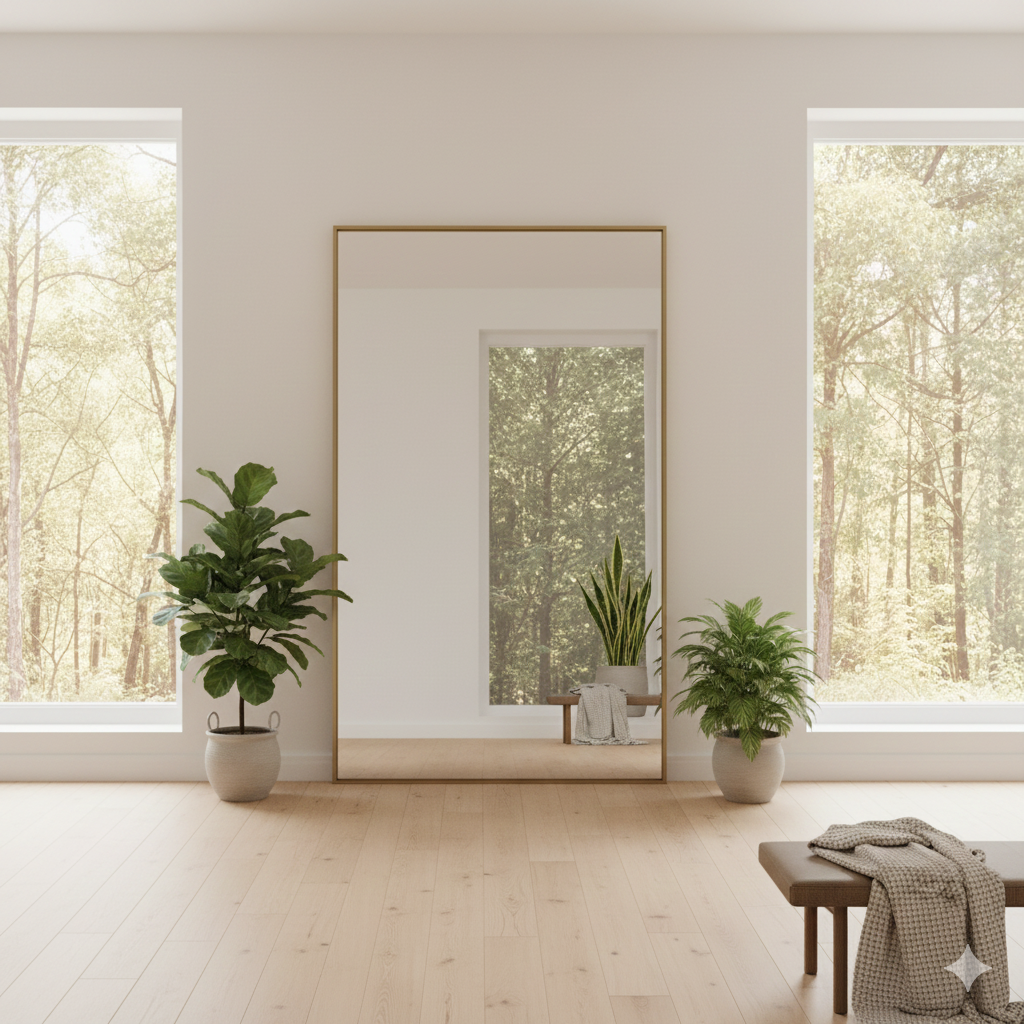
Where to Hang a Plane Mirror for Maximum Light & Space

Plane mirror in galdwyne are one of the easiest, most cost-effective ways to boost daylight and create the illusion of depth in a room. This guide walks through how placement, angle, size, and mirror type affect both natural and artificial light, and how the right mounting can turn tight, dim spaces into airy, inviting rooms. If you live with narrow hallways, dark corners, or rooms without windows, a few targeted mirror strategies can redirect daylight, amplify lamp output, and lengthen sightlines to reduce that boxed-in feeling.
Below you’ll find room-by-room advice — where to place mirrors relative to windows, which sizes and shapes produce specific spatial effects, recommended mirror types and finishes, tactics for lighting windowless areas, and installation and safety tips. Each section includes quick lists and clear rules you can test in your home, plus suggested local options for custom fabrication and installation when a professional touch makes the result cleaner and safer.
How Does Strategic Mirror Placement Maximize Natural Light in Your Home?
Mirrors increase natural light by reflecting window daylight deeper into a room, raising overall luminance and extending visible sightlines without changing the structure. The idea is simple: place a plane mirror opposite or adjacent to a window so it captures incoming daylight and redirects it along new paths. Properly placed mirrors can also frame attractive outdoor views, creating a pleasant visual extension of the room. Small adjustments and in-place testing help you avoid glare while improving light spread across darker areas.
Thoughtful placement also considers how you use the room and where furniture sits so reflections enhance usable space instead of highlighting clutter. Tiny angle shifts can steer sunlight into a corner or across a dining table, so try leaning the mirror temporarily during peak daylight to find the best position. Below we explain why opposite and adjacent window placements work so well and how modest angular tweaks let you control reflected sun without introducing hotspots.
Why Place Mirrors Opposite or Adjacent to Windows?
Putting a mirror opposite or near a window multiplies incoming daylight by reflecting it back into the room, which both brightens the space and creates a greater sense of depth. An opposite placement captures the full window view and throws light across the room—handy in living rooms and open-plan layouts. Placing the mirror adjacent to a window is a good alternative when opposite would reflect an unflattering view or cause glare; it grabs side light and redirects it toward darker corners. Try different positions throughout the day to tune how much light the mirror returns and to ensure it amplifies nice views rather than distractions.
When picking the wall, favor surfaces that face main seating or traffic paths so the reflected view adds perceived roominess. Reflecting a window essentially doubles the outdoor scene, increasing perceived distance and giving rooms a lighter, more continuous feel that makes them appear larger than their actual square footage.
What Are the Best Angles for Hanging Mirrors to Redirect Sunlight?

Tiny angle changes—tilting a mirror down or rotating it slightly toward a darker wall—let you control where reflected sunlight lands and avoid glare. As a practical guideline, tipping the top of the mirror forward about 5–10 degrees will send light lower into the room; small sideways rotations shift the reflection horizontally. Often these modest moves are enough to redistribute daylight without creating hotspots. Use temporary leaning or adjustable brackets to test angles over a few hours so you can see how the sun’s path alters the effect.
Don’t aim mirrors so they throw the sun directly into seating areas or screens, and set the mirror height so reflected light hits above furniture rather than creating surface glare. Once you find the sweet spot, secure the mirror with properly rated hardware and check again across seasons to account for changing sun angles.
How Can Mirrors Make Small Rooms Look Bigger and More Open?
Mirrors expand perceived space by extending sightlines and creating continuous reflective planes that trick the eye into seeing greater depth and width. A large mirror on a dominant wall captures and repeats visual cues—window light, furniture lines, architectural details—so the room reads as more spacious. Vertical mirrors emphasize ceiling height, while wide horizontal mirrors increase perceived width; grouping smaller mirrors into a grid or gallery can mimic a larger, uninterrupted surface.
Where you place mirrors depends on room function and traffic flow: narrow hallways benefit from full-length panels that create uninterrupted depth; living rooms gain from mirrors behind low sofas that extend sightlines; and bedrooms need placements that balance natural light reflection with practical dressing use. Below is a quick comparison to help you choose sizes and shapes for specific spatial effects.
| Mirror Type | Characteristic | Perceived Effect |
|---|---|---|
| Full-wall panels | Large continuous surface | Maximum depth and visual continuity |
| Vertical narrow mirrors | Tall, slim proportions | Boosts perceived ceiling height |
| Wide horizontal mirrors | Broad, low-mounted pieces | Widening effect along a wall |
| Grouped small mirrors | Multiple reflective elements | Decorative depth with scattered reflections |
| Round or oval mirrors | Soft, curved edges | Focal accents without harsh lines |
Which Mirror Sizes and Shapes Create the Illusion of Depth?
How much depth a mirror creates depends on its size relative to your wall and ceiling. A useful rule of thumb for a strong effect is to aim for a mirror that fills roughly 60–80% of the visual plane when you want maximum impact. Rectangular or paneled mirrors are excellent for extending sightlines, while round or sculpted mirrors soften the space and provide a focused accent without dominating. Oversized frameless mirrors offer the largest reflective surface, while framed or beveled options add visual character but slightly reduce usable reflection.
Match shape to goal: use tall panels to emphasize height in rooms with low ceilings, and place wide, low-mounted mirrors to make narrow living areas feel broader. If wall space is limited, a vertical grid of narrow mirrors can simulate floor-to-ceiling coverage without a single massive sheet.
How Do Mirror Placement and Room Type Affect Perceived Space?
Function, furniture layout, and traffic patterns determine the best mirror placement. Hallways often benefit from longitudinal mirrors at eye level to visually double their length. Dining rooms gain when a large mirror sits opposite windows, reflecting both light and table settings. In bathrooms and bedrooms, align mirrors with eye lines and grooming needs so they’re functional without unintentionally “cutting” the room. Entryways are great for accent mirrors that catch adjacent light and create a welcoming first impression.
Also consider environment: in bathrooms or coastal homes, choose tempered or safety-backed mirrors for humidity and high-traffic durability. Thoughtful placement that respects daily use will let a mirror extend space without compromising practicality.
What Are the Best Mirror Types and Styles for Enhancing Light and Space?
Mirror construction and finish change how they look and perform: frameless mirrors maximize reflective area for a clean, bright effect; beveled edges add decorative light play and perceived depth; tinted or antique finishes shift color temperature and mood. More reflective surface means more bounce, while frames and edge treatments either ground the piece visually or soften transitions to the wall. Choose the type that matches whether your priority is raw brightness, style, or a balance of both.
Below is a practical comparison of common mirror styles with notes on where each excels and what to consider for installation. After that we explain how custom mirrors solve tricky walls and why frameless is often the choice for maximum light amplification.
Picking the right style helps you meet brightness goals without sacrificing the room’s design.
| Mirror Style | Best for Brightness | Best for Space Illusion | Installation Notes |
|---|---|---|---|
| Frameless mirror | Very high reflective area | Seamless wall continuation | Requires precise mounting and finishing |
| Framed mirror | Moderate reflective area | Decorative focal point | Frame adds visual weight and reduces reflectivity slightly |
| Beveled-edge mirror | High decorative light play | Enhances perceived depth | Edge work increases cutting and finishing complexity |
| Tinted/antique mirror | Lower brightness, strong mood | Atmosphere-setting, not for max light | Use sparingly to avoid dimming the room |
How Do Custom Mirrors Tailored to Your Space Improve Light Reflection?
Custom mirrors increase effective reflection by fitting odd walls and architectural features exactly, closing gaps that would otherwise break the reflective plane. A mirror cut to a niche or angled to match a sloped ceiling creates a larger uninterrupted surface that boosts luminance and extends sightlines. Edge details and backing choices—like polished edges or safety silvering—also affect brightness and long-term performance in specific environments.
Custom fabrication is especially useful in stairwells, rooms with built-ins, or when off-the-shelf sizes leave dead zones. Tailored pieces let you prioritize reflectivity where it matters while adding design touches like beveling or subtle tinting to control mood.
When Should You Choose Frameless Mirrors for a Seamless Look?
Choose frameless mirrors when maximizing reflective area and achieving a modern, uninterrupted look are top priorities. They work well in bathrooms, full walls behind sofas, and minimalist interiors where continuity of surface enhances perceived space. Frameless installations require careful measurement and professional mounting so edges meet the wall cleanly and seals shield against moisture where needed.
If you prefer a decorative accent instead, a framed or beveled mirror may suit your scheme better while trading a small amount of reflectivity. Frameless options demand exact installation and occasional extra attention to edge protection and anchoring.
How to Brighten Dark Corners and Windowless Rooms Using Mirrors?
In rooms without windows or in shadowed corners, mirrors make artificial light more effective by reflecting lamp output into adjacent areas. The most effective tactic is placing mirrors behind lamps or opposite light sources so the light bounces out instead of getting absorbed by dark walls. Clustered mirrors and mirrored panels scatter light across multiple angles, evening out illumination and reducing deep shadows. Match mirror finish to your lighting temperature—warmer finishes for cozy spaces, cooler ones for task areas—to keep the reflected light feeling natural.
Try mirror-backed consoles with table lamps, mirrors behind sconces, or modular mirrored panels that cover larger wall areas. Test small adjustments and combine ambient plus accent lighting to prevent glare while getting the most even distribution from reflected light. The section below lists practical arrangements and describes how decorative mirrors can double as brightness-enhancing focal points.
What Mirror Arrangements Work Best to Reflect Artificial Light?
Placing mirrors directly behind table lamps or console lights multiplies their output and softens localized shadows. Sconces flanking a mirror deliver symmetrical reflection that brightens a hallway or foyer. A mirror across from a pendant or chandelier makes the fixture read larger and more luminous. For broad coverage, mosaic or modular mirrored panels scatter light across many angles, minimizing hotspots and producing softer, more even illumination in windowless rooms.
When combining mirrors with artificial light, keep reflected bulbs out of direct sight and tweak distance and angle to limit glare. Diffusing shades and lower-intensity bulbs paired with mirrors often yield the most comfortable, evenly distributed light.
Using reflectors like mirrors is a proven strategy to improve daylight penetration into deeper interior spaces.
Designerly Optimization of Reflectors for Daylight Improvement
One effective approach to bring daylight into deep-plan or windowless spaces is to create light-wells and use reflectors to direct sky light where it’s needed. Reflectors, when placed thoughtfully, can raise the effective reflection coefficient of surrounding walls and guide light down into lower or interior spaces. This work looks at designing daylight-assist devices that first collect and funnel sky light and then distribute it into the desired rooms.
Designerly optimization of devices (as reflectors) to improve daylight and scrutiny of the light-well’s configuration, A Goharian, 2022
How Can Decorative Mirrors Serve as Focal Points to Enhance Room Brightness?

Decorative mirrors pull double duty: they’re design anchors and secondary light sources. A sunburst or ornate frame positioned to catch a lamp or window becomes both a visual centerpiece and a practical reflector, drawing the eye and brightening the surrounding area. The frame shapes attention while the reflective surface multiplies local light without overpowering the room’s style.
Choose decorative mirrors with enough reflective area relative to their frames so they remain functional as light enhancers. Place them to catch views or light sources that elevate the room’s ambiance, and avoid very dark or heavily tinted finishes that would weaken brightness.
Why Is Professional Mirror Installation Important for Optimal Light and Space?
Professional installation matters because safety, accurate alignment, and solid mounting directly affect how well a mirror reflects light and how long it lasts. Large mirrors are heavy and need the right anchors or mechanical mounts for your wall type; tempered glass or safety backing is often recommended in high-traffic spots. A precise install ensures the mirror sits level and at the correct height and angle to deliver the intended light distribution rather than creating glare or awkward reflections.
Experienced installers also handle finishing details—edge protection, silicone seals for humid areas, and trim integration—so the mirror appears like part of the architecture rather than a retrofit. Below is a quick reference table of common installation considerations and recommended mounting methods.
| Mirror Attribute | Recommended Mounting Method | Safety/Handling Note |
|---|---|---|
| Large single-panel mirror | Mechanical clips + reinforced anchors | Use tempered glass and safety backing in living areas |
| Full-wall mirror panels | Continuous support rails or adhesive + mechanical backup | Ensure wall studs or continuous support; test adhesive compatibility |
| Heavy framed mirrors | Wall anchors rated for weight + hanger brackets | Verify wall substrate and distributed load points |
| Bathroom mirrors | Corrosion-resistant mounting + silicone seal | Use safety backing and moisture-rated finishes |
What Are the Key Safety Considerations When Hanging Large Mirrors?
Key safety steps include identifying your wall substrate (drywall, plaster, masonry), choosing anchors rated for the mirror’s weight, using tempered or safety-backed glass in impact-prone areas, and distributing the load across studs or continuous rails. The wrong anchors can fail; untempered glass increases injury risk if it breaks. Installers also address environmental factors—bathrooms need corrosion-resistant hardware and sealed edges to keep backing from deteriorating.
Preparing the wall, confirming weight and support, and selecting proper hardware protect occupants and preserve mirror performance. A post-install check confirms secure mounting and correct alignment to maintain both safety and visual effect.
How Does Berwyn Glass Co. Ensure Precision Installation for Maximum Effect?
At Berwyn Glass Co., we pair custom cutting and finishing with careful installation so mirrors deliver both safety and the intended light-and-space improvements. Our local team evaluates wall structure, room use, and the desired reflection angle, then recommends tempered or safety-backed options and the right mounting system. Working with a nearby glazier simplifies measurement, adjustments, and on-site decisions so homeowners get precise placement and secure anchorage—especially important for large or frameless installations.
If you’re planning a major mirror project where alignment, safety backing, and finish quality matter, bringing in a local specialist like Berwyn Glass Co. can streamline the process and help you achieve the best brightness and spatial outcome.
Where Can You Find Custom Mirror Solutions to Fit Your Unique Interior Design Needs?
Local glass fabricators provide custom cutting, edge finishing, and installation services to meet specific architectural needs. They can measure odd walls, recommend tempered or safety-backed mirrors for busy areas, and suggest frameless or beveled options that balance brightness with style. For homeowners who want a single point of contact—consultation, fabrication, and installation—choosing a nearby glass company simplifies logistics and improves the final look.
Berwyn Glass Co. offers custom mirror fabrication and precision installation tailored to homes in Phoenixville and the surrounding area. To request a free mirror consultation or installation quote, contact Berwyn Glass Co. through their official channels to schedule measurements and design guidance suited to your space.
How Do Custom Mirrors from Berwyn Glass Co. Enhance Your Home’s Light and Space?
Custom mirrors from Berwyn Glass Co. maximize reflective area by cutting and finishing pieces to fit architectural features exactly, eliminating visual gaps where light is lost. Precise cuts and local craftsmanship let mirrors sit flush in niches, follow stair angles, or create uninterrupted wall planes that extend sightlines. Our installers consider wall substrate, humidity, and finish details to preserve long-term reflectivity and performance.
Choosing custom mirrors reduces visual dead zones and uses plane mirrors to brighten rooms and produce convincing depth illusions tailored to your home’s layout.
Beyond mirrors, Berwyn Glass Co. also makes a range of custom glass products for the home, including modern grid showers for a sleek industrial look in contemporary bathrooms.
We also build refined sliding shower doors, a space-saving, stylish option that improves function and flow in smaller bathrooms.
How to Contact Berwyn Glass Co. for a Free Mirror Consultation and Installation Quote?
To schedule a free mirror consultation and installation quote with Berwyn Glass Co., reach out via the company’s contact channels to request an on-site measurement or design visit. Expect a conversation about preferred mirror type, size, edge finish, mounting method, and any safety needs like tempered glass or backing. From that consultation we’ll provide a custom quote outlining fabrication and installation options so you can choose the solution that best balances brightness, style, and budget.
Booking a local consultation simplifies coordination and ensures mirror choices are tuned to your home’s light dynamics and design goals. The next step is to contact Berwyn Glass Co. and set a time for measurement and a quote.
- Placement opposite or adjacent to windows: Mirrors capture and redirect daylight, increasing overall room brightness.
- Use angle testing before installation: Temporarily lean mirrors and observe at different times to avoid glare and find the best bounce.
- Prioritize frameless for maximum reflectivity: Frameless panels offer the largest usable reflective surface for strong depth effects.
Frequently Asked Questions
1. How can I determine the best size of mirror for my room?
Measure the wall and consider the room’s scale. A practical guideline is to choose a mirror that fills about 60–80% of the visual plane when you want a strong impact. In small rooms, larger mirrors create depth; in larger spaces, multiple smaller mirrors can keep balance while still adding visual interest. Make sure the mirror complements furniture and sightlines for the best effect.
2. What types of mirrors are best for enhancing light in a room?
Frameless mirrors maximize reflected surface and are best for brightness. Beveled mirrors add decorative light play while still improving depth. Tinted or antique mirrors create atmosphere but lower overall brightness, so use them where mood matters more than raw light. Match the mirror type to your lighting goals and interior style.
3. How do I safely hang a large mirror?
Use mounting hardware rated for the mirror’s weight—mechanical clips and reinforced anchors are common for heavy pieces. Check your wall substrate and try to distribute load across studs or continuous supports. If you’re unsure, hire a professional installer to guarantee safety, level alignment, and lasting performance.
4. Can mirrors help in reducing energy costs?
Yes. Properly placed mirrors can increase natural daylight in a room, reducing the need for daytime electric lighting and potentially lowering energy use. By making spaces feel brighter and more comfortable, mirrors can also reduce reliance on supplemental heating or cooling in some cases.
5. What are the best practices for maintaining mirrors?
Clean mirrors with a soft, lint-free cloth and a gentle glass cleaner to avoid streaks and scratches. Don’t use abrasive materials. In humid areas, ensure mirrors are sealed and mounted correctly to prevent moisture damage. Periodically check mounting hardware for tightness, especially on larger installations.
6. How can I use mirrors to enhance a small apartment?
In a small apartment, place mirrors opposite windows to reflect daylight and open up the space. Use vertical mirrors to draw the eye upward and add perceived height. A gallery of smaller mirrors can add depth and interest without overwhelming the room—just be mindful to reflect pleasant views and light sources.
7. What should I consider when choosing a decorative mirror?
Consider size, shape, and frame style so the mirror complements your decor. Make sure it will reflect useful light or an attractive view to boost brightness. Frame material and color affect the room’s look, so pick an option that balances functionality with style; ensure the reflective area remains large enough to serve its purpose.
Conclusion
Strategic mirror placement is an easy, high-impact way to brighten rooms and make them feel larger. By reflecting natural and artificial light and extending sightlines, mirrors transform compact or dim spaces into more open, comfortable environments. For tailored results and safe installation, consider working with local experts who can provide custom mirror options and professional mounting. Reach out to explore how a well-placed mirror can change the way your home looks and feels.