In homes throughout Morgan, homeowners are increasingly incorporating mirrors into their interior design strategies to maximize both beauty and practicality. From elegant decorative mirrors to highly functional bathroom and full-length mirrors, the right mirror can significantly influence the appearance and atmosphere of a space. Understanding how different Types of Mirrors contribute to interior design allows homeowners to make smarter decorating decisions and achieve more impressive results.
Whether used in a living room, bedroom, dining area, hallway, bathroom, or entryway, mirrors have the unique ability to completely transform a home’s aesthetic without requiring major renovations.
The Role of Mirrors in Modern Interior Design
Modern interior design emphasizes openness, natural light, functionality, and visual balance. Mirrors support all of these objectives simultaneously. Unlike many decorative features that serve a single purpose, mirrors contribute both practical and aesthetic value.
One of the primary reasons designers frequently use mirrors is their ability to reflect light. Natural sunlight and artificial lighting bounce off reflective surfaces, helping rooms feel brighter and more welcoming. This effect is especially valuable in homes with limited natural light or smaller rooms that can otherwise feel confined.
Mirrors also influence how people perceive space. By reflecting surrounding areas, mirrors create a sense of depth that can make rooms appear significantly larger than they actually are. This makes them one of the most effective design tools for improving spatial perception without structural modifications.
Understanding the various Types of Mirrors available enables homeowners to take full advantage of these design benefits.
Creating the Illusion of More Space
One of the most transformative qualities of mirrors is their ability to make spaces feel larger. Small rooms often feel cramped due to limited visual depth, but mirrors can dramatically alter this perception.
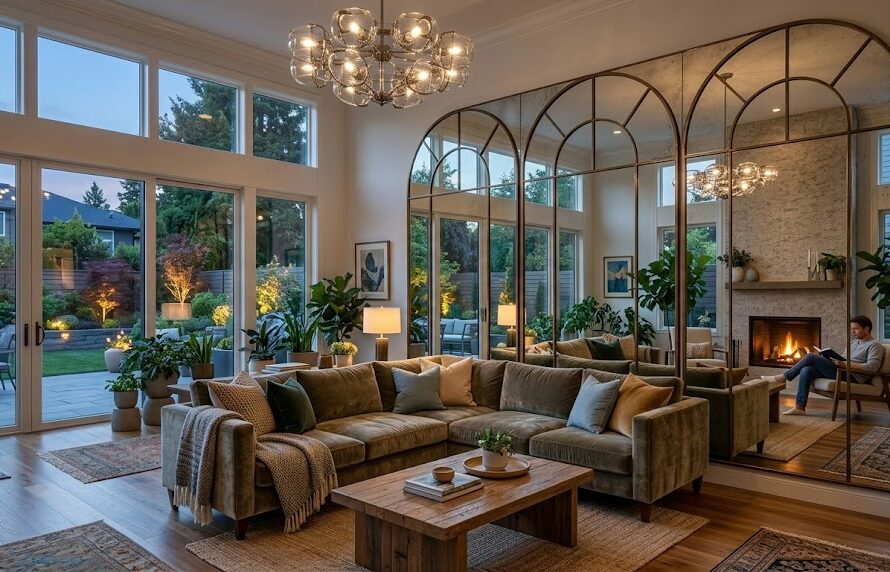
Large wall mirrors placed strategically across from windows or open spaces reflect the room and create an expanded visual field. This optical illusion can make a compact living room, bedroom, hallway, or dining area feel substantially more spacious.
In Morgan homes, where maximizing available square footage is important, mirrors provide a cost-effective solution for improving the perceived size of interior spaces. Rather than investing in expensive renovations, homeowners can use mirrors to achieve a similar visual impact.
Floor-to-ceiling mirrors, oversized decorative mirrors, and mirror walls are particularly effective at creating a sense of openness while maintaining an elegant appearance.
Enhancing Natural Light Throughout the Home
Lighting plays a critical role in interior design. Well-lit spaces feel more inviting, comfortable, and visually appealing. Mirrors amplify both natural and artificial light by reflecting it throughout a room.
When positioned opposite windows, mirrors capture incoming sunlight and distribute it across the space. This reduces dark corners and creates a brighter atmosphere without increasing energy consumption.
In rooms with limited window access, mirrors can help maximize available light sources and make interiors feel more vibrant. Designers often use mirrors near lamps, chandeliers, and wall sconces to enhance overall illumination.
Many homeowners are surprised by how dramatically mirrors can improve a room’s brightness. This simple design technique can transform dull spaces into bright, welcoming environments.
Decorative Mirrors as Statement Pieces
Decorative mirrors have evolved into artistic focal points that contribute significantly to a room’s character. Unlike purely functional mirrors, decorative designs are chosen primarily for their visual impact.
Modern decorative mirrors come in countless shapes, sizes, and styles. Sunburst mirrors, geometric patterns, asymmetrical designs, and custom artistic frames have become increasingly popular among homeowners seeking distinctive design features.
A decorative mirror positioned above a fireplace, console table, or dining room buffet can immediately draw attention and establish a room’s focal point. These mirrors often serve the same visual purpose as artwork while also providing reflective benefits.
Among all Types of Mirrors, decorative mirrors offer some of the greatest opportunities for personalization and creativity.
Using Wall Mirrors to Improve Room Balance
Wall mirrors are among the most versatile interior design elements available. They can fill empty wall space, create symmetry, and balance other decorative features within a room.
Large wall mirrors often serve as anchor pieces that tie various design elements together. Smaller wall mirrors can be grouped to create visually interesting arrangements that add texture and dimension to otherwise plain walls.
Interior designers frequently use wall mirrors to balance heavy furniture pieces or architectural features. For example, placing a mirror opposite a large bookcase or entertainment center helps create visual equilibrium within the room.
This balance contributes to a more polished and cohesive design that feels intentional and professionally planned.
Full-Length Mirrors and Bedroom Design
Bedrooms benefit greatly from the inclusion of full-length mirrors. While these mirrors serve practical purposes for dressing and personal grooming, they also contribute significantly to the room’s overall appearance.
A well-positioned full-length mirror can make a bedroom feel larger and brighter while adding a touch of sophistication. Leaning mirrors have become especially popular because they combine functionality with decorative appeal.
Modern full-length mirrors are available in minimalist, industrial, traditional, and contemporary designs that complement virtually any décor style. Their versatility makes them an essential component of many successful bedroom designs.
Transforming Bathrooms with Modern Mirrors
Bathrooms are among the most mirror-dependent spaces in any home. However, modern bathroom mirrors do far more than support daily grooming routines.
Large frameless mirrors create a clean, contemporary aesthetic that enhances the perception of space. LED mirrors add both functionality and luxury by improving visibility while contributing to the room’s overall ambiance.
Backlit mirrors, anti-fog technology, and integrated smart features have become increasingly common in modern bathroom design. These advancements demonstrate how mirrors continue to evolve alongside changing homeowner preferences.
Bathroom mirrors often serve as the centerpiece of the room, making their selection especially important from both functional and design perspectives.
Framed vs. Frameless Mirrors in Interior Design
Choosing between framed and frameless mirrors significantly influences a room’s appearance.
Framed mirrors introduce additional texture, color, and visual interest. Their frames can reinforce a specific design style, whether rustic, traditional, industrial, or contemporary. Wood, metal, and decorative composite materials each contribute unique aesthetic qualities.
Frameless mirrors, on the other hand, emphasize simplicity and minimalism. Their clean lines create a sleek appearance that works particularly well in modern interiors.
Both options offer valuable design benefits. The choice ultimately depends on the desired style and the role the mirror will play within the overall décor scheme.
Mirror Walls for Dramatic Transformations
Few design elements create as much visual impact as a mirror wall. By covering an entire wall or a significant portion of a wall with mirrors, homeowners can dramatically alter how a room looks and feels.
While mirror walls require careful planning and professional installation, their transformative effect is difficult to match through other design techniques.
For homeowners seeking a dramatic interior upgrade, mirror walls offer exceptional results.
Smart Mirrors and the Future of Interior Design
Technology continues to influence residential design, and smart mirrors represent one of the most innovative developments in the industry.
These mirrors combine traditional reflection with integrated digital displays, voice assistants, weather updates, fitness tracking, and smart-home connectivity. They are particularly popular in bathrooms, dressing areas, and home gyms.
Smart mirrors demonstrate how modern Types of Mirrors are evolving beyond traditional functionality to become interactive components of contemporary living spaces.
As smart-home adoption continues to increase, smart mirrors are expected to play an even larger role in future interior design trends.
Comparison of Mirror Types and Their Design Impact
| Mirror Type | Interior Design Benefit | Best Location |
|---|---|---|
| Wall Mirror | Enhances space and light | Living rooms, hallways |
| Full-Length Mirror | Adds depth and functionality | Bedrooms, closets |
| Bathroom Mirror | Combines practicality and style | Bathrooms |
| Decorative Mirror | Creates focal points | Entryways, dining rooms |
| Frameless Mirror | Supports modern aesthetics | Bathrooms, living rooms |
| Framed Mirror | Adds texture and character | Any room |
| Mirror Wall | Maximizes visual space | Gyms, dining rooms |
| Smart Mirror | Integrates technology | Bathrooms, dressing areas |
Common Mirror Placement Mistakes to Avoid
While mirrors offer numerous design benefits, improper placement can reduce their effectiveness. Positioning mirrors where they reflect clutter, harsh lighting, or unattractive views can negatively impact a room’s appearance.
Designers recommend placing mirrors where they reflect natural light, attractive décor features, or open areas. This ensures the reflection enhances the space rather than detracts from it.
Scale is also important. A mirror that is too small may appear insignificant, while an oversized mirror can overwhelm a room if not balanced properly with surrounding elements.
Thoughtful placement ensures homeowners maximize the transformative power of mirrors throughout their interiors.
Frequently Asked Questions
1. How do mirrors make a room look larger?
Mirrors create the illusion of additional space by reflecting surrounding areas and increasing visual depth.
2. Where should mirrors be placed to maximize natural light?
Mirrors are most effective when positioned opposite or adjacent to windows where they can reflect incoming sunlight throughout the room.
3. Are decorative mirrors functional?
Yes. Decorative mirrors still provide reflection, but their primary purpose is to enhance a room’s visual appeal.
4. Do frameless mirrors work in traditional homes?
While frameless mirrors are commonly associated with modern design, they can complement traditional interiors when paired with appropriate décor.
5. Are mirror walls still popular?
Yes. Mirror walls remain a popular design feature for homeowners seeking to maximize light, visual space, and dramatic interior impact.
Conclusion
The right Types of Mirrors can completely transform interior design by enhancing light, creating the illusion of more space, improving room balance, and adding decorative appeal. From practical bathroom and full-length mirrors to statement-making decorative mirrors, mirror walls, and innovative smart mirrors, each option offers unique advantages that enhance a home’s beauty and functionality. By carefully selecting mirror styles and placement strategies, homeowners can create brighter, more spacious, and visually engaging interiors that reflect both their lifestyle and personal taste. For homeowners in Morgan looking for expert mirror and glass solutions, Berwyn Glass provides quality craftsmanship and professional guidance to help bring every interior design vision to life.