
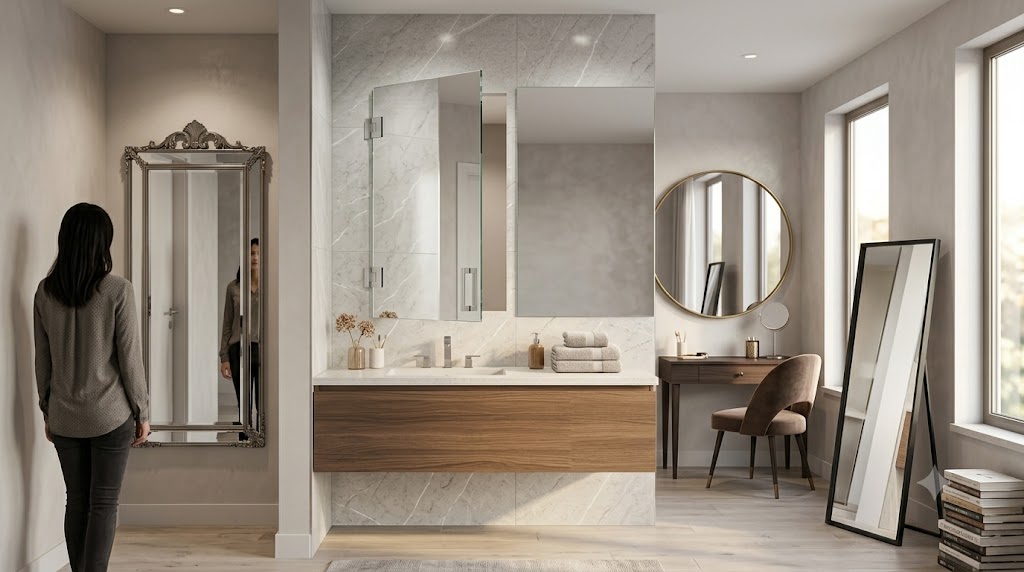
Types of Mirrors for Small Rooms: A Complete Guide
Small rooms can present unique design challenges. Limited square footage often makes spaces feel cramped, dark, or confined, especially when natural light is restricted. Fortunately, homeowners do not always need expensive renovations or structural changes to make a room feel larger and more inviting. One of the most effective and affordable solutions is the strategic use of mirrors.
Mirrors have long been a favorite tool among interior designers because of their ability to transform a room visually. They reflect light, create depth, and make spaces appear significantly larger than they actually are. In homes throughout Morgan, mirrors are frequently used to maximize the potential of smaller bedrooms, bathrooms, hallways, dining areas, and living rooms.
Understanding the best Types of Mirrors for small spaces can help homeowners create brighter, more open environments while enhancing the overall style of their homes. Whether the goal is to improve lighting, add decorative appeal, or create the illusion of extra space, choosing the right mirror can make a remarkable difference.
Why Mirrors Work So Well in Small Rooms
Mirrors have a unique ability to alter how a room is perceived. Unlike furniture or decorative accessories that occupy physical space, mirrors visually expand a room by reflecting surrounding areas. This reflection creates an illusion of depth that tricks the eye into perceiving a larger environment.
Another significant advantage is their ability to amplify light. Small rooms often suffer from limited natural lighting, making them feel even smaller. Mirrors capture and reflect both natural and artificial light, distributing it more evenly throughout the space and creating a brighter atmosphere.
In addition to their practical benefits, mirrors serve as attractive design features that complement virtually any interior style. Whether a home features modern, traditional, farmhouse, transitional, or contemporary décor, there is a mirror style that can enhance the overall aesthetic.
Because of these advantages, mirrors remain one of the most effective tools for improving small spaces.
Large Wall Mirrors: The Ultimate Space Enhancer
When it comes to maximizing the appearance of a small room, large wall mirrors are often the first recommendation from interior designers. Their expansive reflective surface creates the strongest illusion of added space.
A large mirror positioned on a primary wall can visually double the perceived size of a room. In compact living rooms, bedrooms, and dining areas, this effect can dramatically improve openness and comfort.
Large wall mirrors work especially well when placed opposite windows. This positioning reflects outdoor views and natural sunlight, creating a brighter and more expansive environment.
Among all Types of Mirrors, large wall mirrors are often considered the most effective option for making small rooms feel larger.
Frameless Mirrors for a Clean and Open Look
Frameless mirrors have become increasingly popular in modern homes because of their sleek and minimalist appearance. Without a visible frame, these mirrors blend seamlessly into their surroundings and provide uninterrupted reflection.
The absence of a frame reduces visual clutter, making a room feel cleaner and more spacious. This is particularly beneficial in smaller spaces where every design element contributes to the overall perception of size.
Frameless mirrors are commonly used in bathrooms, hallways, home offices, and compact living areas. Their simple design allows them to complement virtually any décor style while maximizing reflective surface area.
Homeowners who prefer a modern aesthetic often choose frameless mirrors because they enhance openness without overwhelming the room.
Full-Length Mirrors in Compact Bedrooms
Small bedrooms often benefit greatly from the addition of full-length mirrors. These mirrors not only provide practical functionality but also contribute significantly to the room’s visual appeal.
A full-length mirror reflects a large portion of the room, creating the impression of greater depth and openness. Leaning mirrors are particularly popular because they add a decorative touch while maintaining flexibility in placement.
Positioning a full-length mirror near a window can amplify natural light and brighten darker areas of the room. This simple design strategy can make even the smallest bedroom feel more comfortable and inviting.
Because they combine practicality with visual enhancement, full-length mirrors remain one of the most valuable mirror options for compact spaces.
Decorative Mirrors That Add Personality
Decorative mirrors are an excellent choice for homeowners who want to enhance a small room while also introducing style and character. These mirrors serve as both functional reflective surfaces and decorative focal points.
Available in countless shapes, sizes, and frame styles, decorative mirrors can complement virtually any interior design theme. Circular mirrors, geometric designs, sunburst patterns, and custom artistic frames have become especially popular in modern homes.
In small rooms, decorative mirrors can draw attention away from size limitations and toward attractive design features. They help create visual interest without occupying valuable floor space.
Many homeowners find that decorative Types of Mirrors offer the perfect balance between practicality and aesthetics.
Mirror Walls for Maximum Impact
Mirror walls represent one of the most dramatic ways to transform a small room. By covering a substantial portion of a wall with mirrors, homeowners can create a powerful illusion of expanded space.
Mirror walls reflect the entire room, making it appear significantly larger than its actual dimensions. This technique is commonly used in home gyms, dining rooms, hallways, and compact living areas.
In addition to increasing visual space, mirror walls improve brightness by reflecting natural and artificial light throughout the room. The result is an environment that feels more open, airy, and welcoming.
While large mirror walls require careful planning and professional mirror installation, their impact on small spaces is often unmatched.
Round Mirrors for Softening Small Spaces
Round mirrors have become increasingly popular in interior design because they introduce softer lines and visual balance. In small rooms dominated by rectangular furniture and architectural elements, a circular mirror can create a pleasing contrast.
The curved shape adds visual interest without overwhelming the space. Round mirrors are particularly effective in entryways, bathrooms, bedrooms, and dining areas where homeowners want to create a focal point.
Many designers use round mirrors to break up rigid lines and create a more relaxed atmosphere. Their versatility allows them to complement both modern and traditional interiors.
Bathroom Mirrors That Maximize Functionality
Bathrooms are often among the smallest rooms in a home, making mirror selection especially important. A well-chosen bathroom mirror can dramatically improve both functionality and aesthetics.
Large vanity mirrors are particularly effective because they reflect light and create a sense of openness. Frameless designs remain popular for their clean appearance, while backlit and LED mirrors add both practicality and luxury.
Modern bathroom mirrors may also include anti-fog technology, touch controls, and integrated lighting systems. These features enhance usability while contributing to a more sophisticated appearance.
For homeowners seeking to maximize a small bathroom, investing in the right mirror can deliver significant improvements.
Corner Mirrors for Unused Spaces
Corners are often underutilized areas within small rooms. Installing mirrors in these spaces can help maximize their design potential.
Corner mirrors create additional angles of reflection that increase the perception of depth. They also help distribute light more effectively throughout the room, reducing dark or unused areas.
This technique is particularly useful in narrow hallways, compact bedrooms, and small living rooms where maximizing every inch of visual space is important.
Although less common than traditional wall mirrors, corner mirrors can provide unique advantages in specific situations.
Smart Mirrors for Modern Small Spaces
Technology has introduced new possibilities for mirror design. Smart mirrors combine traditional reflection with digital functionality, making them particularly attractive for homeowners seeking convenience and innovation.
These mirrors can display weather forecasts, calendars, fitness data, and smart-home controls while maintaining their reflective purpose. Because they serve multiple functions, smart mirrors can reduce the need for additional devices and accessories in small spaces.
Smart mirrors are especially popular in bathrooms, dressing areas, and home offices where efficiency and organization are priorities.
As smart-home adoption continues to grow, these advanced mirrors are becoming an increasingly popular option for modern interiors.
Comparison of Mirror Types for Small Rooms
| Mirror Type | Primary Benefit | Best Room |
|---|---|---|
| Large Wall Mirror | Creates maximum visual space | Living rooms, bedrooms |
| Frameless Mirror | Clean and open appearance | Bathrooms, hallways |
| Full-Length Mirror | Adds depth and functionality | Bedrooms, closets |
| Decorative Mirror | Enhances style and character | Entryways, dining rooms |
| Mirror Wall | Dramatically expands visual space | Gyms, living rooms |
| Round Mirror | Softens room design | Bathrooms, bedrooms |
| Bathroom Mirror | Improves lighting and usability | Bathrooms |
| Corner Mirror | Maximizes unused areas | Hallways, living rooms |
| Smart Mirror | Combines technology and reflection | Bathrooms, offices |
Tips for Mirror Placement in Small Rooms
Choosing the right mirror is only part of the equation. Proper placement is equally important for achieving the desired effect.
Mirrors should ideally be positioned opposite windows to maximize natural light reflection. They can also be used to highlight attractive architectural features, artwork, or decorative elements.
Avoid placing mirrors where they reflect cluttered areas, as this can make a room feel busier and more confined. Instead, focus on reflecting open spaces and light sources.
Scale is another important consideration. A mirror that is too small may not provide enough visual impact, while an oversized mirror can dominate a room if not balanced appropriately.
Thoughtful placement ensures homeowners fully benefit from the transformative power of mirrors.
Frequently Asked Questions
1. What type of mirror makes a small room look bigger?
Large wall mirrors and mirror walls are generally the most effective options for creating the illusion of additional space.
2. Are frameless mirrors better for small rooms?
Frameless mirrors often work exceptionally well in small spaces because their clean design reduces visual clutter and enhances openness.
3. Where should mirrors be placed in a small room?
Mirrors should ideally be positioned opposite windows or light sources to maximize brightness and create a greater sense of space.
4. Can decorative mirrors help small rooms?
Yes. Decorative mirrors add style while still reflecting light and creating visual depth, making them valuable additions to compact spaces.
5. Are mirror walls still a popular design trend?
Absolutely. Mirror walls remain popular because they significantly increase perceived space and improve overall room brightness.
Conclusion
The right Types of Mirrors can completely transform small rooms by creating the illusion of more space, enhancing natural light, and improving overall interior design. Whether homeowners choose large wall mirrors, frameless designs, full-length mirrors, decorative statement pieces, or dramatic mirror walls, each option offers unique advantages that contribute to a brighter and more spacious environment. By selecting mirrors strategically and placing them thoughtfully, homeowners can maximize the potential of even the smallest rooms. For residents looking for premium mirror and glass solutions in Morgan, Berwyn Glass provides expert craftsmanship and professional guidance to help create beautiful, functional living spaces.